Chest pain seems easy until you are seated across from the patient and not quite sure what to do next. Is this coronary artery disease? Do we need more testing? Should we push harder on prevention? Can we spare someone an invasive procedure that will not help? These decisions are familiar to all of us. New evidence suggests that AI in cardiology could help us make them with greater confidence.
The PARAMOUNT trial was presented at the American Heart Association Scientific Sessions 2026 in Chicago. The findings suggest that AI analysis of coronary plaque may increase diagnostic certainty, boost preventive treatment and reduce invasive angiography that leads nowhere. The results are promising. They should also be read carefully.
There is no shortage of impressive AI demos in healthcare. What physicians need is evidence that these tools change clinical decisions for the better. That is why PARAMOUNT is worth our attention. It was presented as late-breaking science and is described as the first randomized trial of AI-enabled plaque-based care.
It was a prospective, multicenter, open-label study at 21 sites. A total of 530 patients were randomized and results were reported for 523. Participants were symptomatic outpatients with suspected coronary artery disease, LDL cholesterol of at least 100 mg/dL and no known coronary disease. The median age was 57 and 57% were women.
One group had coronary CT angiography with AI-based quantitative plaque analysis and plaque-based ischemia assessment using Cleerly's AI-QCT software. The other group received usual care guided by functional stress testing. Whether an algorithm can find plaque was not the question. The question was whether that information changes care. A tool can look great on a technical test and still not help in a busy clinic.
At 180 days the hierarchical composite primary endpoint favored AI-guided care with a win ratio of 2.00. That is a good outcome, but it is not a doubling of survival or a halving of heart attacks. The biggest contributor was better diagnostic certainty about whether the patient's chest pain was caused by coronary disease.
This is more significant than it seems. Take a middle aged patient with a few risk factors and intermittent exertional chest discomfort. The story is worrying but not conclusive. A stress test tells you whether ischemia shows up today. Coronary CT angiography with quantitative plaque assessment looks at the atherosclerosis directly. If that image helps you decide whether coronary disease explains the symptoms, your next steps on treatment and testing get clearer. So does the conversation with the patient.
The lipid numbers caught my eye. In the AI-guided group, lipid-lowering therapy use climbed from 31% to 75%. With usual care it went from 32% to 47%. That is a big gap in how physicians prescribed.
Why the difference? When you can see and measure coronary plaque, atherosclerosis stops being theoretical, for us and for our patients. Think of the patient with a high LDL who feels fine and has put off a statin for two years. Now pull up his own plaque on the screen during the visit. The conversation moves from a vague future risk to disease he already has.
Finding plaque does not decide the right treatment for every patient. Clinical judgment still matters. But PARAMOUNT hints that seeing coronary disease more clearly may help us catch prevention opportunities we would otherwise let slip.
The angiography data are practical too. Among patients who went on to invasive angiography, 38% in the AI-guided group did not need revascularization. In the usual care group that number was 60%. Put simply, fewer AI arm patients made the trip to the cath lab only to find nothing to fix.
An angiogram without an intervention is not always wasted. Sometimes it gives you the answer you needed. The fair reading is that AI-guided evaluation may do a better job of picking the patients who will benefit from invasive testing. For systems where procedure slots are tight, that is attractive. Better selection means more focused referrals, fewer avoidable procedures and a cleaner path from first visit to treatment. Promising, yes. Proof of better long-term outcomes, not yet.
I understand the excitement. Still, a few limits deserve a hard look before AI for physicians becomes routine in chest pain evaluation.
The results are preliminary and not yet peer reviewed. Full publication is expected in early 2027.
The trial was open-label. Clinicians knew which strategy each patient received, which could shape both management and judgments of diagnostic certainty.
Cleerly, the company that makes the software, sponsored the study. Industry funding does not invalidate research, but independent review of the full methods matters.
Follow-up was 180 days. That is far too short to show whether any of this prevents heart attacks or deaths.
PARAMOUNT also enrolled a specific outpatient group. We should not stretch its results to the emergency department or to patients who already carry a coronary diagnosis.
The question for those of us in clinic is not whether AI can spot coronary plaque. It is whether that information helps the patient sitting in front of us. PARAMOUNT is an encouraging sign of AI in cardiology moving past technical scores toward real changes in care.
Bringing coronary CT angiography with AI analysis into practice takes more than a software license. We have to understand what the tool measures, how its output should shape treatment and when another test is still the better call. The accountability stays with us too. AI can describe the disease. It does not know the patient's preferences, the competing diagnoses or what matters most to them. The best use of AI in cardiology is not to replace judgment. It is to hand us better information at the moment judgment counts.
PARAMOUNT gives healthcare AI something it has been missing. It is randomized evidence that an AI-guided diagnostic strategy can change clinical management in a meaningful way. It does not show that AI prevents heart attacks or saves lives. As the full data come out, we should weigh the benefits and the limits before we rewrite chest pain pathways that work.
Have you used coronary CT angiography, plaque analysis or AI-assisted cardiac testing in your practice? Is it changing your decisions, or are the big questions still open for you? Share your experience with colleagues in the MedSocially community.
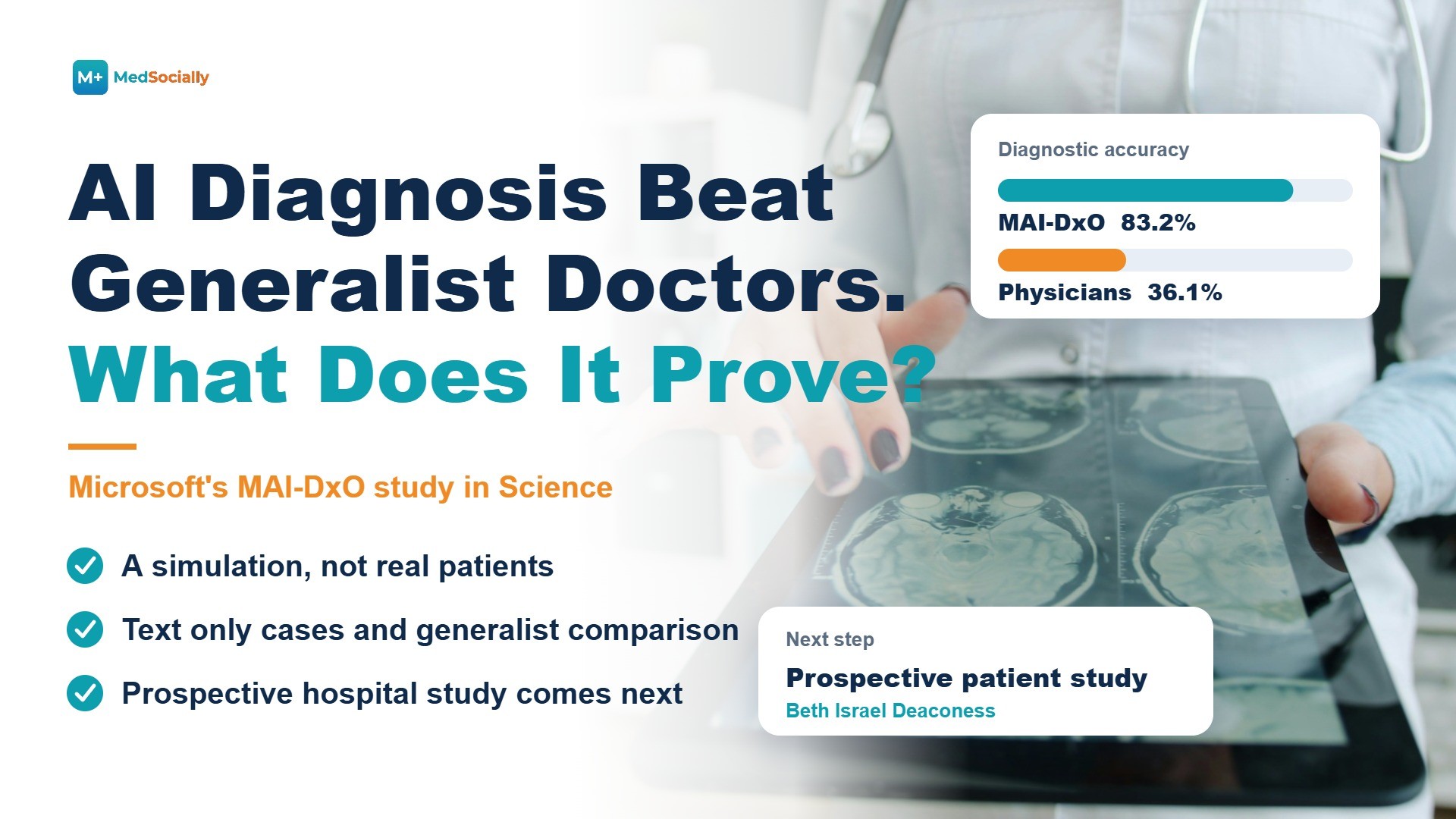
Every doctor should take note of the results of Microsoft's diagnostic AI. In a study published in Science, the system outperformed generalist physicians on difficult diagnostic ca...
Physician burnout seems to be on the decline. It is good news for a profession that has felt exhausted and stressed for years. But another trend deserves attention. Clinics are ope...
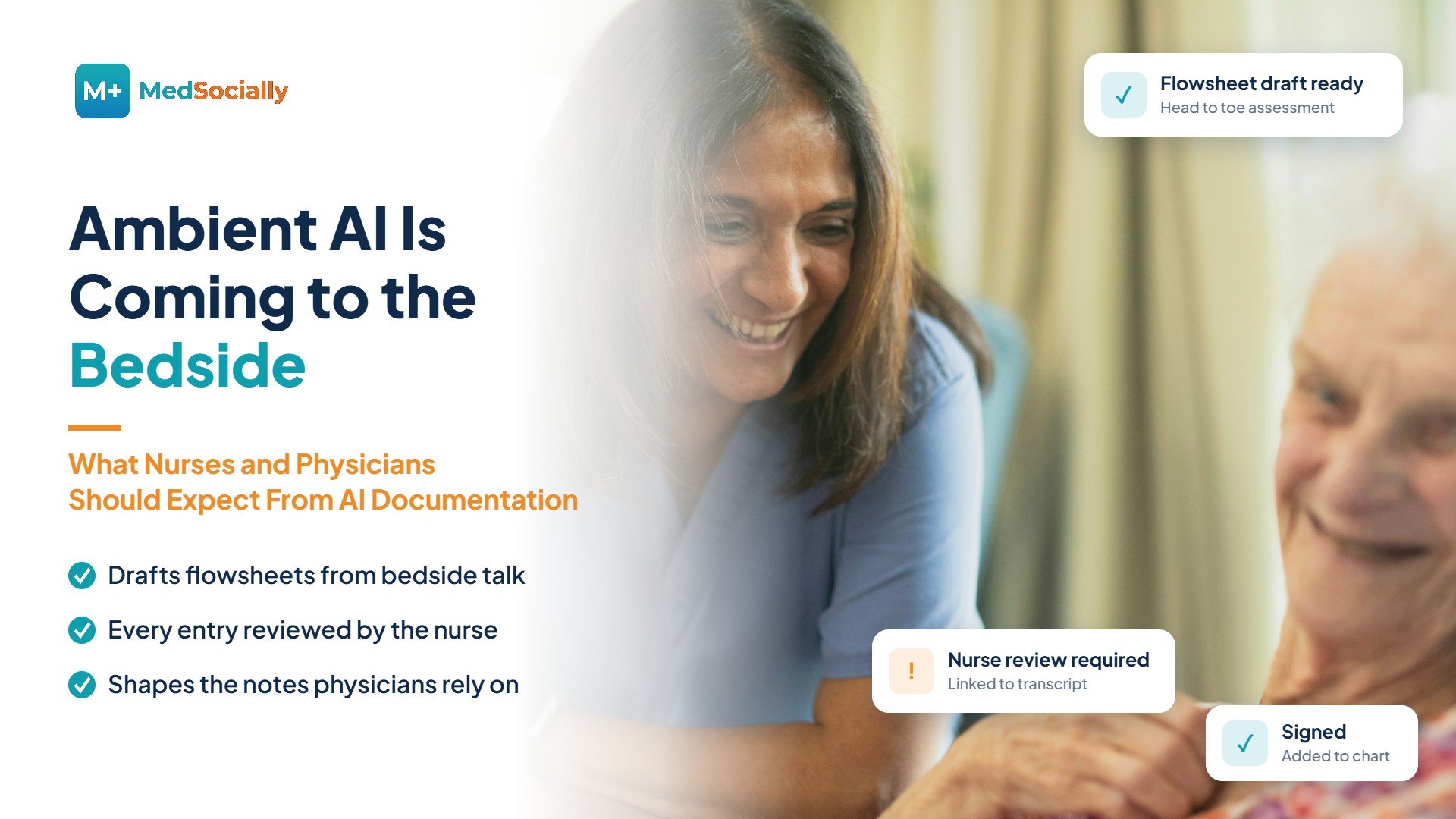
Ambient AI nursing documentation is moving from concept to clinical use. For the last several years these tools were built around physician notes. Now they are moving into inpatien...
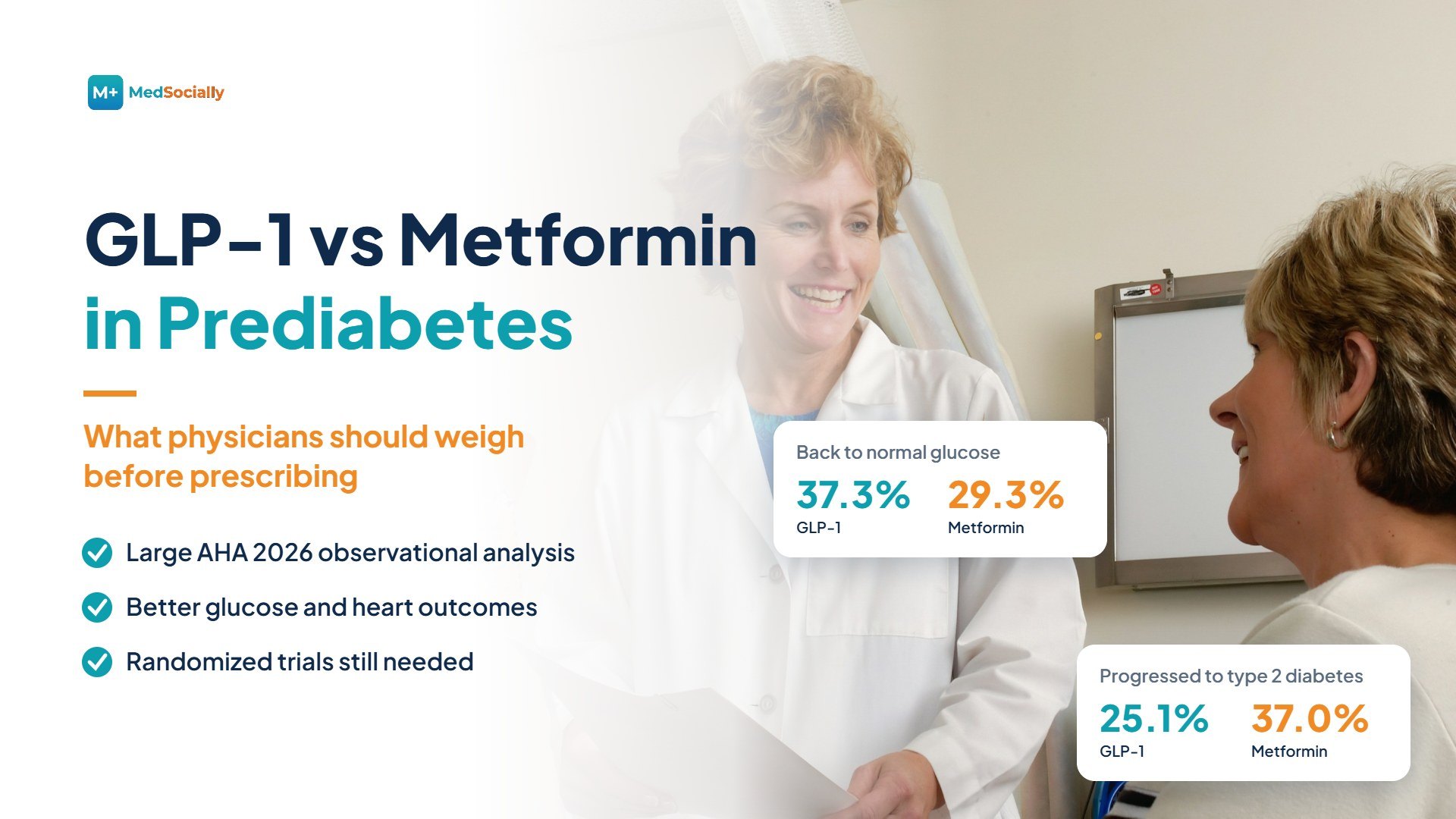
You have a patient with prediabetes in your exam room, and she asks a question you have heard more than once this year. "If these weight loss shots work so well, why am I still on ...
AI can write a convincing clinical explanation in seconds. Convincing does not always mean correct. As more of us bring clinical AI tools into daily practice, the question is no lo...