AI can write a convincing clinical explanation in seconds. Convincing does not always mean correct. As more of us bring clinical AI tools into daily practice, the question is no longer whether AI can help. It is whether we can trust what it produces without checking. A new Doximity report suggests physicians already know the answer. Most have caught AI making factual mistakes and most keep using it anyway. The real task is making verification a quick habit instead of one more administrative chore.
Doximity's Doctor-Driven AI Report, released on November 12, 2026, surveyed 3,379 U.S. physicians in September. About 52% use AI for work every day and 85% use it at least weekly. Adoption of clinical AI tools has clearly moved past the early stage.
Accuracy is still the sticking point. Three in four physicians said they had run into a factual inaccuracy from AI in the past 12 months. Two-thirds said they verify AI clinical information all or almost all of the time.
That skepticism is healthy. Medicine has always asked us to weigh information before we act on it. An AI response is material for clinical review, not a conclusion that deserves automatic acceptance.
Wrong information from AI often sounds right. An answer can be clear, organized and professionally worded while still containing an error. The confidence of the writing tells us nothing about the accuracy of the medicine underneath it.
Picture a hospitalist caring for a patient with several chronic conditions. She asks a chatbot to summarize treatment considerations. The response looks reasonable and uses all the right terms. One recommendation, though, ignores an important detail in the patient's history. If she accepts it without checking, that gap could shape the plan of care.
The issue is not that AI has no value. Useful and incorrect information can sit side by side in the same answer. That is why AI accuracy in medicine is a practical bedside concern and not an abstract debate. Ask whether the advice fits this patient, whether key caveats are missing and whether it matches the references you already trust.
Accuracy is only half the story. Privacy deserves equal attention.
Imagine a physician typing a question about a complicated outpatient case. To give the chatbot enough context she adds the patient's age, history, town and a few identifying details. The question feels routine. It may reveal far more than she intended.
Before entering clinical details into any chatbot, ask what the tool truly needs. Can the question be answered without a name? Can identifying details come out? Has your organization approved this tool for patient information at all? Removing obvious identifiers is a good precaution, but it does not make data anonymous and it does not make an unapproved tool appropriate for protected health information. The safest path is simple. Use approved systems, follow your organization's privacy rules and share only what the task requires.
Physicians do not need another long checklist. We need a short habit that fits the workflow. Before AI generated information touches patient care, run through five quick checks:
Check the facts against references you trust.
Check the patient context, including history, medications and contraindications.
Check any calculation with a validated clinical calculator.
Check privacy and whether the tool is approved for this use.
Make the clinical decision yourself.
Here is how that looks in real life. A primary care physician uses AI to draft patient education about a new medication. The explanation is clear and kind. Before sending it she compares it with the prescribing information and notices that the section on side effects is incomplete. She fixes it in two minutes and the patient never sees the gap. That is responsible AI for physicians. The goal is not to reject AI output. It is to stop plausible errors from becoming patient advice.
New tools are starting to tackle these problems. On November 11, 2026, MDCalc launched CrossCover, a layer that sits between clinicians and AI chatbots. CrossCover does not generate answers itself. Partner tools such as AMBOSS and Vera Health do that.
What CrossCover adds is a set of guardrails. It flags likely patient identifiers in a question and recommends removing them before the question goes to an AI model. It limits physician identity and location details from reaching partner models. When a question calls for a score, it surfaces a validated MDCalc calculator. A beta feature called CrossCheck compares AI generated clinical information with ECRI and American College of Physicians references and flags differences for the doctor to review.
These features target real weak spots in AI clinical decision support. There are limits, though. CrossCover is opening first to a founding group of practicing physicians and no independent evaluation has been published yet. A flagged discrepancy also does not prove that everything else in the answer is right. For now it is best seen as a promising extra review layer, not a guarantee of safety.
The Doximity report points to a bigger organizational gap. Only 28% of physicians reported clear policies and formal approvals for AI where they work. That leaves many clinicians deciding on their own which tools to use, what to share and how to check the results. Another 34% named legal and regulatory uncertainty as the biggest factor limiting their AI use.
Those worries make sense. Physicians need clear guidance on approved tools, acceptable clinical uses, privacy protections and who is responsible for reviewing AI output. Good policies also explain how to report an AI error and what to do when a recommendation conflicts with clinical judgment. Organizations should not encourage AI adoption and then leave each clinician to build the safeguards alone. As clinical AI tools become routine, governance belongs in everyday patient safety planning.
The Doximity findings show physicians balancing enthusiasm with caution. We use AI often, we catch real errors and we check before we rely on it. Tools like CrossCover may make that easier. No extra layer removes the need for clinical judgment. If AI generated information could affect a patient's care, it deserves a check before it reaches that patient.
How are you checking AI answers in your practice? Have you caught a convincing but wrong recommendation or built a verification routine that works? Share your experience with colleagues in the MedSocially community so we can all use these tools with more confidence and the right amount of caution.
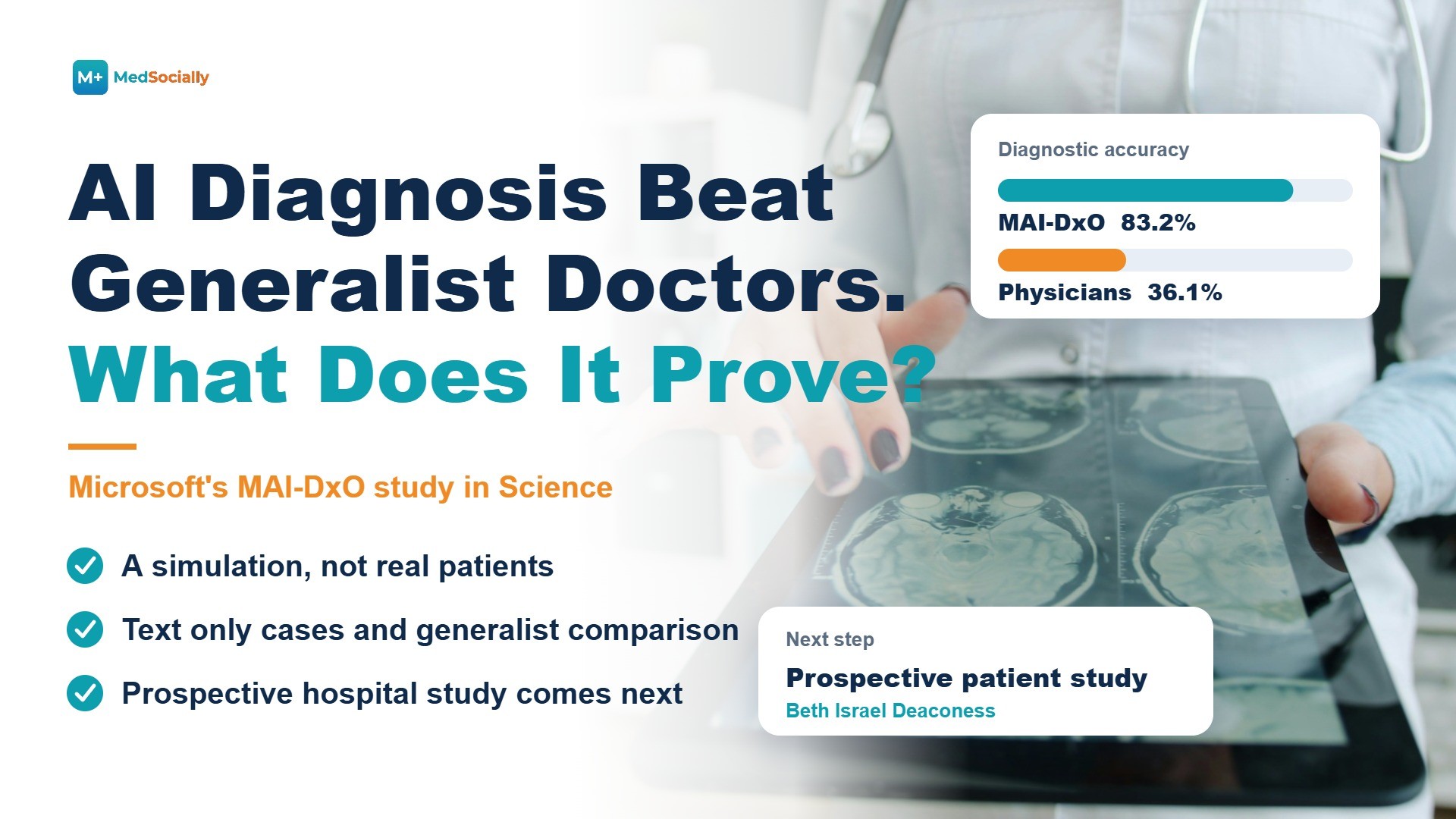
Every doctor should take note of the results of Microsoft's diagnostic AI. In a study published in Science, the system outperformed generalist physicians on difficult diagnostic ca...
Physician burnout seems to be on the decline. It is good news for a profession that has felt exhausted and stressed for years. But another trend deserves attention. Clinics are ope...
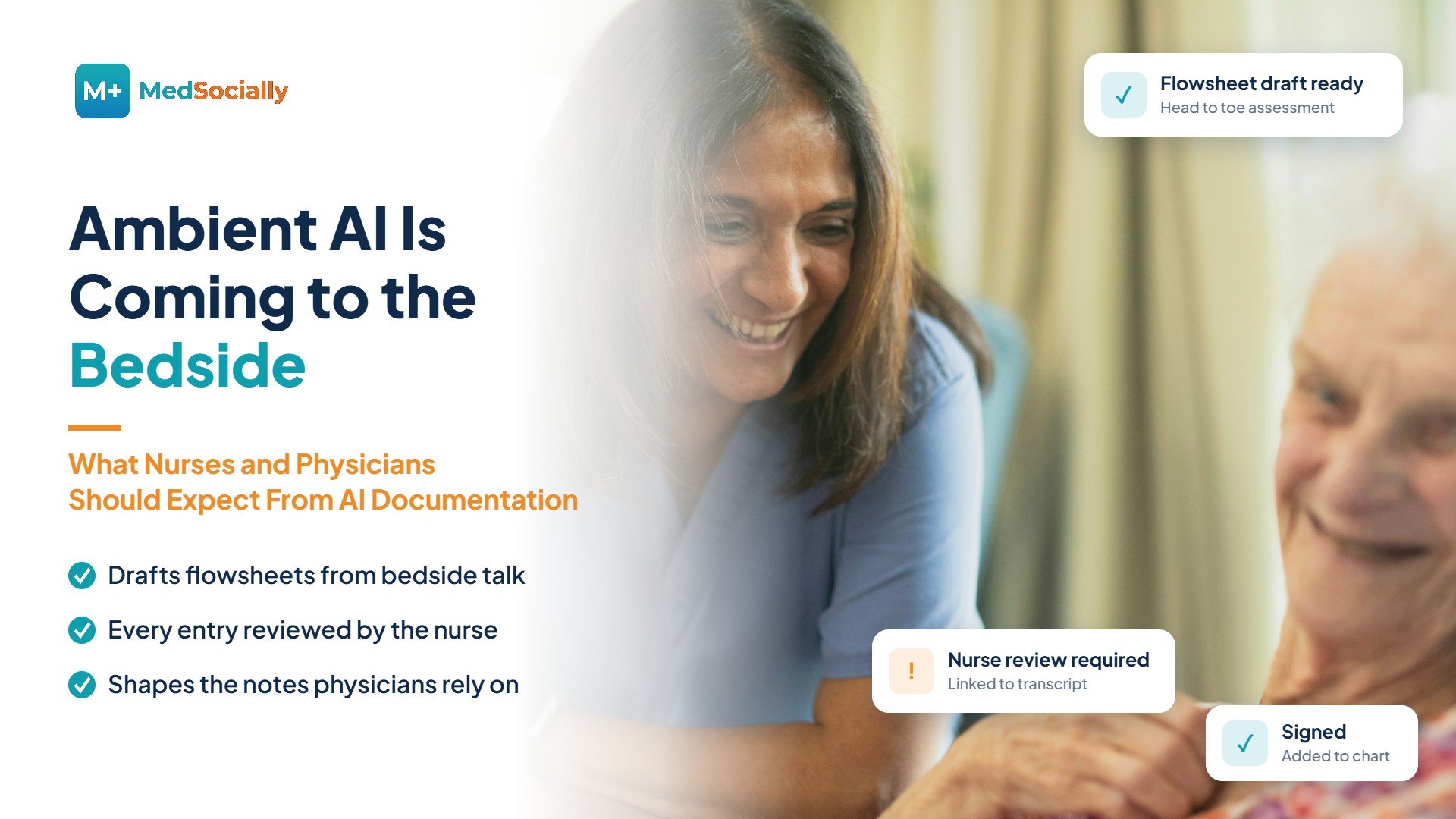
Ambient AI nursing documentation is moving from concept to clinical use. For the last several years these tools were built around physician notes. Now they are moving into inpatien...
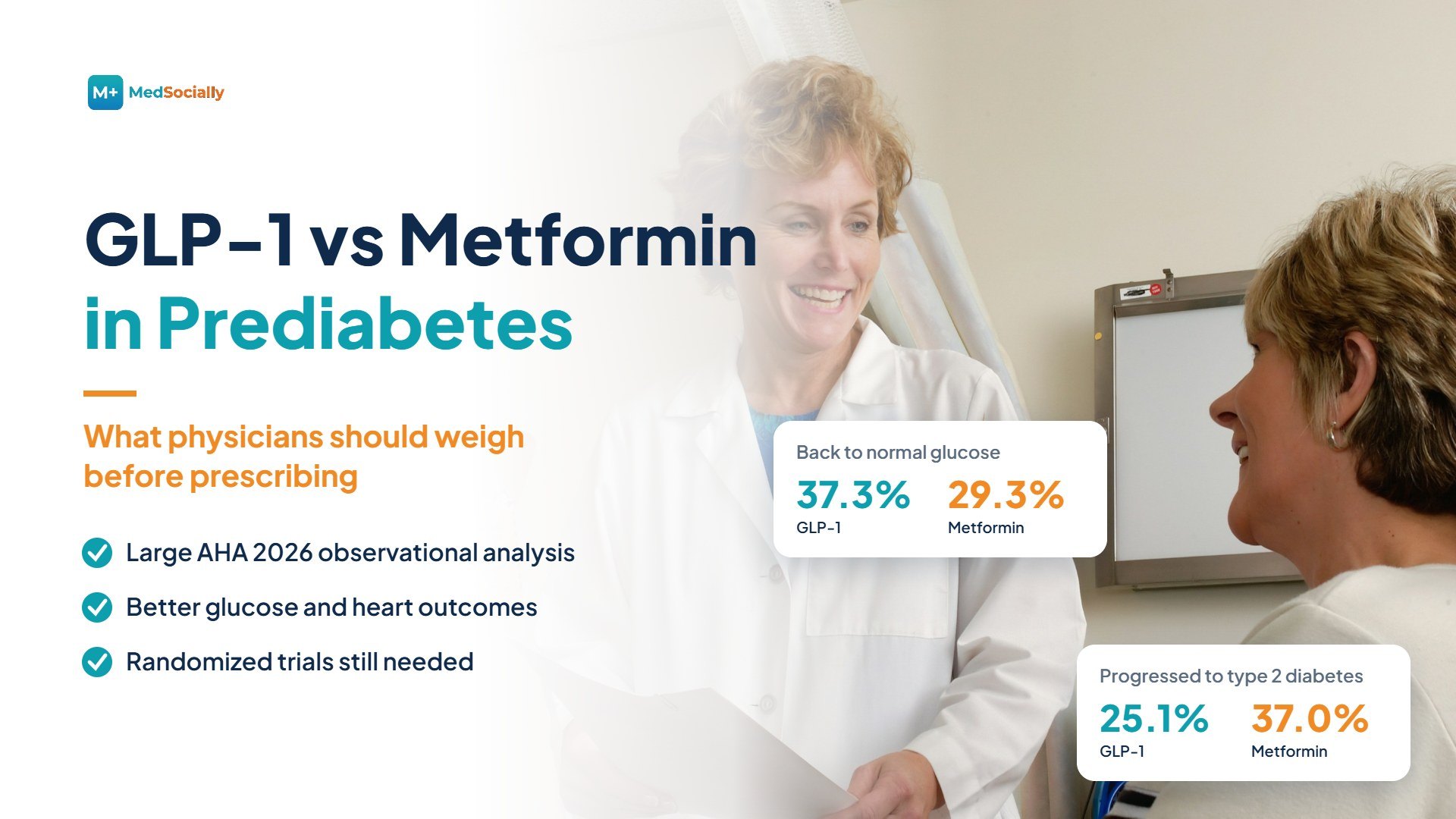
You have a patient with prediabetes in your exam room, and she asks a question you have heard more than once this year. "If these weight loss shots work so well, why am I still on ...
A patient needs treatment. You order it. The insurer demands more paperwork. Time goes by and the patient gives up. That is the quiet price of prior authorization delays, and new s...