AI scribe documentation has changed the end of the clinic day for many of us. Notes that used to eat an hour after dinner now appear as drafts before the next patient is roomed. That is a real relief. But every one of those notes carries your signature. Medical Economics recently asked whether the tool that gives you your evenings back is also building a file that could be used against you. Here is what physicians need to know before the next audit or claim.
Adoption has been rapid. Robert Wachter reports that about 70 percent of UCSF physicians use an AI scribe and about 90 percent of those users like it. At Mass General Brigham burnout among scribe users dropped from 52.6 percent to 30.7 percent over 84 days. Those are significant numbers.
The time data is less consistent. A JAMA study of 8,581 clinicians at five academic health systems found about 16 minutes of documentation time saved per eight scheduled patient hours. EHR time after hours did not change significantly. In an April flash poll of 103 physicians 42 percent said a scribe saved them no time on a typical day while 20 percent saved more than an hour. The value of AI scribe documentation depends on your workflow and on how closely you have to check each draft.
Imagine a hectic Tuesday with twenty two patients. The scribe records a neat and clear note for each visit. You move from room to room and tap the reviewed button. Nothing looks wrong. That is the very risk. Sarah Matt, a practicing physician and Medical Economics advisory board member, put it simply: "Errors that look right get signed."
The legal picture is straightforward. The signing physician is usually the one who is liable and not the vendor under the captain of the ship doctrine. A one click reviewed attestation can be weak evidence that you actually read the note. Wachter said there is no technical mechanism at UCSF to verify that a doctor has read a note before signing it. One evaluation of physician reviewed notes found omissions in 18 percent and hallucinations in 11.5 percent while 94.7 percent showed no significant errors. Most notes are fine. The few that are not still carry your name.
AI drafts often fall back on boilerplate such as conditions stable. An auditor may consider that sort of language nonprobative because it says nothing about your thinking. This matters for add on codes like G2211 where the note has to show your reasoning about the longitudinal relationship with the patient. That documentation will matter even more when the 2027 Medicare physician fee schedule takes effect in January.
Regulators are watching. Federal regulators have named AI related documentation and coding an enforcement priority. In 2024 a large hospital system paid 23 million dollars to settle allegations tied to an automated coding rule. Jay Anders of Medicomp Systems also says some tools work backward from billable codes. Your note should capture what happened in the room and not what pays best.
Patients in California have filed proposed class actions over scribe recordings made without consent. Texas Senate Bill 1188 requires practitioners who use AI to review AI generated records and to disclose that use to patients. The audio is not just a byproduct of the note. It is protected health information.
There is a clinical side as well. A University of Edinburgh review found that patients may hold back on sensitive topics when they know they are being recorded and that notes may miss much of the patient's own narrative. If you have not considered what scribes hear in the exam room, it is time to start.
Vendor liability caps often limit what the company owes for documentation errors and that puts more risk on your practice. Health care attorney Tatiana Melnik notes that a twelve month fee cap could shrink to almost nothing if an incident surfaces years later after the vendor has retained your data past termination. She also expects that malpractice carriers may refuse coverage in some cases where AI was involved. Before you sign anything read the contract for data use and retention and de identification terms.
You do not have to give up on the tool. You do need habits that make your signature mean what it always has. Here is a simple routine drawn from the experts quoted in the reporting:
Read each draft closely and add your own reasoning for complex decisions.
Check any suggested codes against what actually happened in the visit.
Get affirmative patient consent and have a plan for patients who decline.
Learn where the audio is stored and for how long.
Tell your malpractice carrier which AI tools you use before a claim ever arises.
The same discipline applies to any clinical AI. If you want to build the habit of how to verify AI answers before they reach a chart or a patient this is where to start.
Since so many physicians use AI every week the habits matter more than the brand of tool. The scribe is a drafting instrument and you remain the author of record. Good habits protect your time and your license at once.
How has AI scribe documentation worked out in your own practice? Have you changed how you review notes or talk to patients about recording? Share your experience with colleagues in the MedSocially community and help set the standard for responsible use.
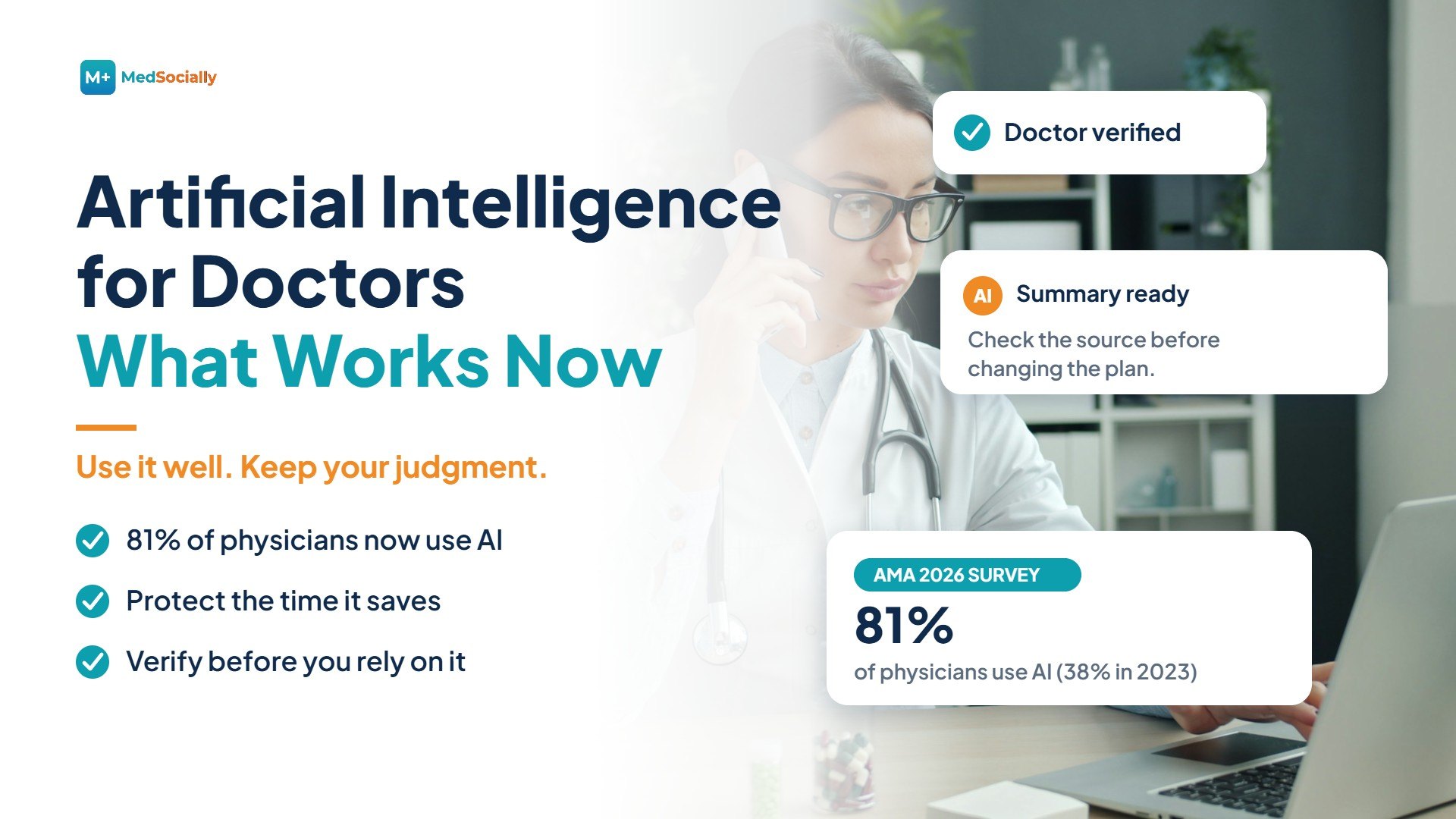
Artificial intelligence for doctors is no longer a novelty. It has become a standard part of daily practice. Many physicians now open an AI tool before they open a journal, and the...
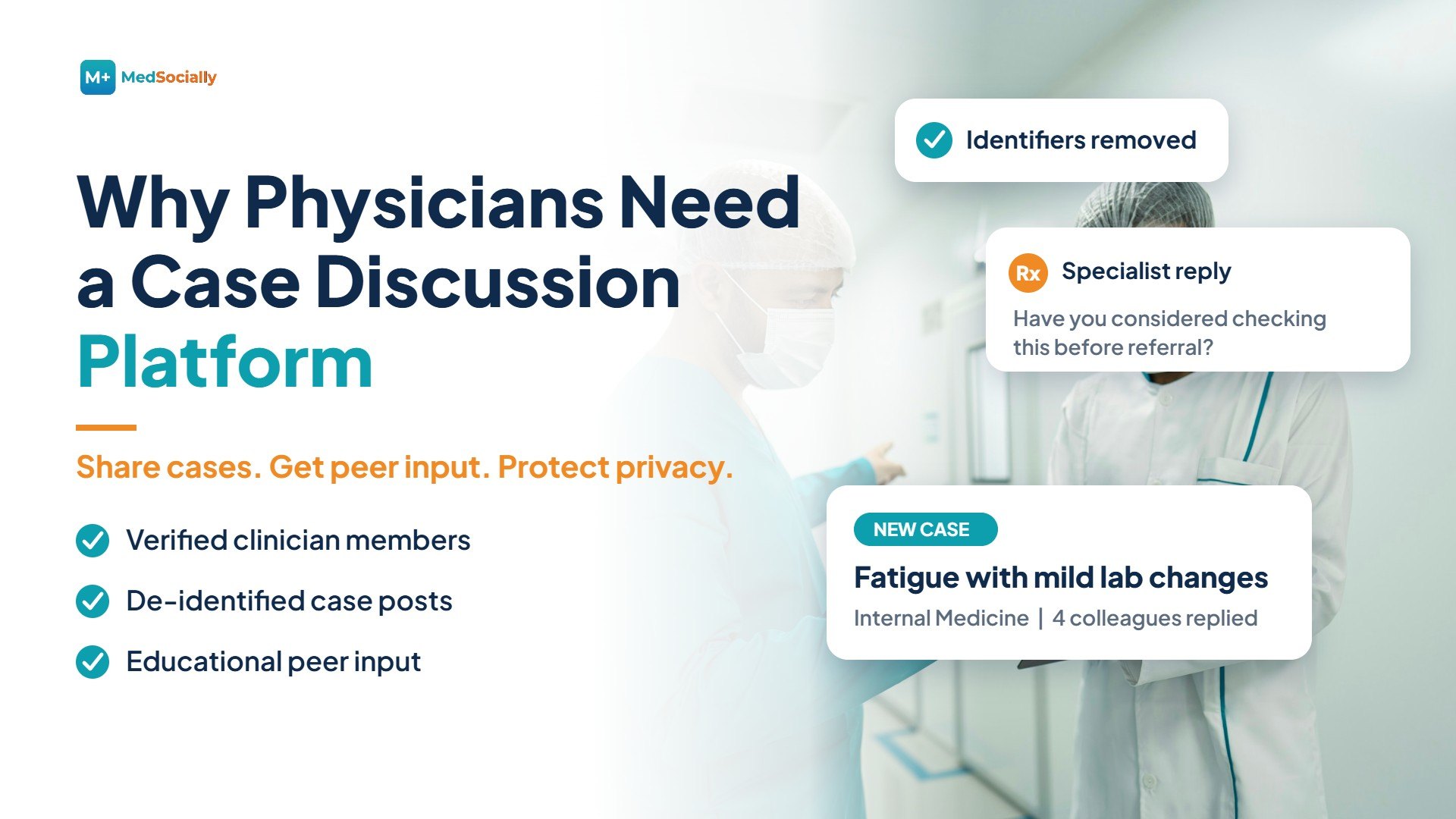
Every physician knows the moment. A patient's results do not match the story, the guideline does not quite fit the situation, and the colleague you would normally ask is in another...
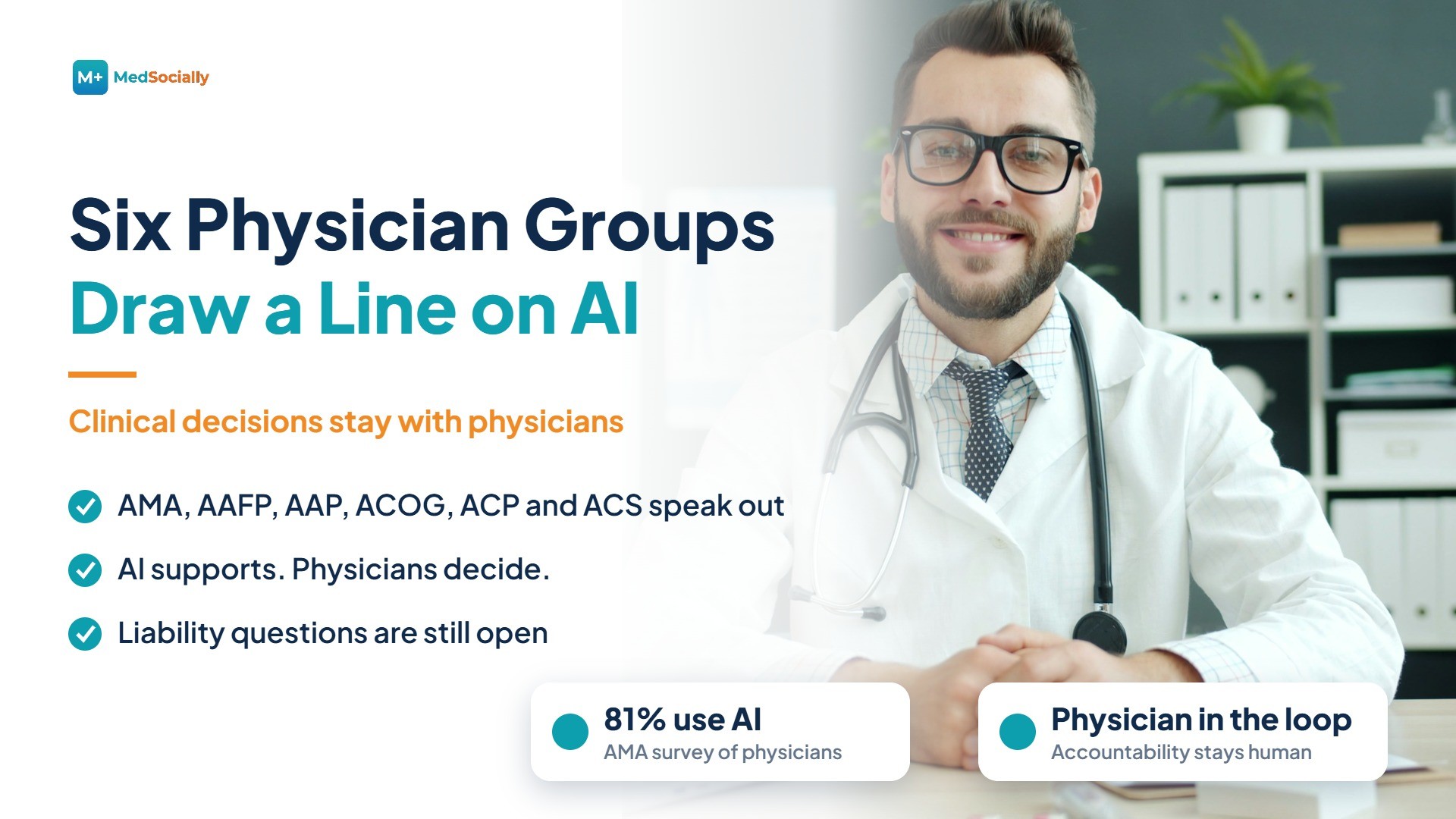
Six major physician groups issued a joint statement on September 30 that said what many of us feel in the exam room. AI is a helpful tool. It does not outperform physicians and it ...
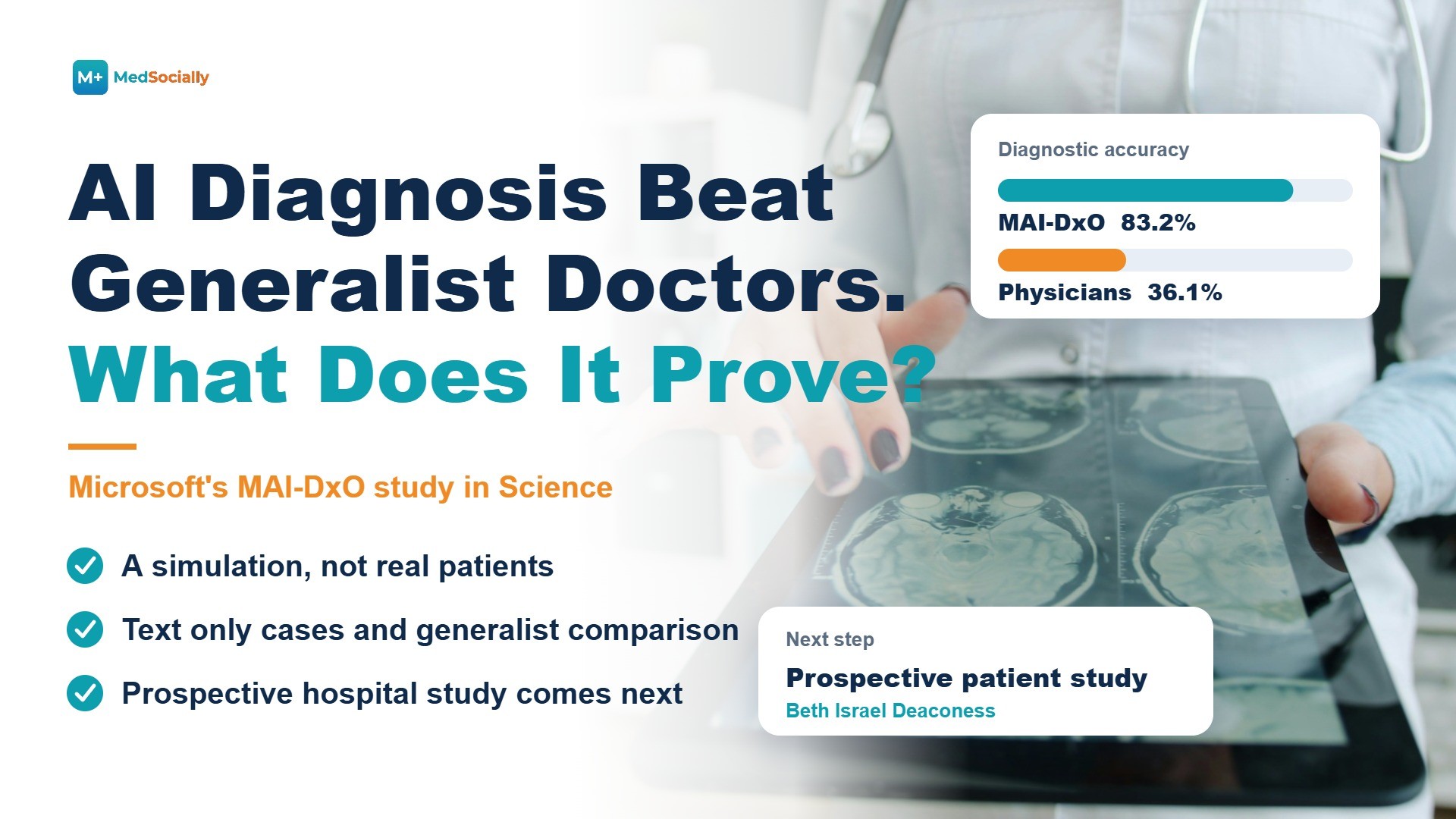
Every doctor should take note of the results of Microsoft's diagnostic AI. In a study published in Science, the system outperformed generalist physicians on difficult diagnostic ca...
Physician burnout seems to be on the decline. It is good news for a profession that has felt exhausted and stressed for years. But another trend deserves attention. Clinics are ope...