Artificial intelligence for doctors is no longer a novelty. It has become a standard part of daily practice. Many physicians now open an AI tool before they open a journal, and the question in the clinic is no longer whether to use it. The better question is how to use it well without giving up the judgment that patients are counting on. This guide compiles the latest AMA data and this month's HLTH conversation and translates them into some practical habits.
According to the AMA's 2026 physician survey, 81 percent of physicians now use AI in their practices. The figure was 38 percent in 2023, which means adoption roughly doubled in three years. The average doctor reported 2.3 use cases, compared with 1.1 in 2023.
Enthusiasm comes with caution. Coverage of the survey reported that 40 percent of physicians described themselves as equally excited and concerned. Their worries center on patient privacy and the integrity of the patient and physician relationship. Many also worry that patients may interpret results with AI before a physician has explained them.
It is a subtle change, and it happened without any major announcement. A tool that started out as a novelty on one colleague's phone is now part of how a lot of us prepare for a visit, finish a note or check a reference.
The survey suggests two leading uses. One is summarizing medical research. The other is clinical documentation. Both make a good starting point. A physician can read the output, compare it with what actually happened in the room or with the source paper, and correct it before it reaches a patient.
Imagine a primary care doctor with ten minutes before a patient with an unusual drug interaction. An AI summary can provide a preliminary overview of the literature. The doctor still opens the source before changing the plan. That is the pattern that works. AI does the first pass and the doctor does the verification.
At HLTH this month, Dr. John Whyte, the AMA's CEO, made a point that deserves attention. Physicians who have adopted these tools have not reported more time with patients, he said. In many cases they were given other tasks instead, and AI scribes have saved less time than people expected. He also cautioned against repeating the EHR experience, when new technology added to burnout.
Most of us know this story from the inside. A scribe shortens the note, and then the inbox expands to fill the time that was saved. When you evaluate a tool for your clinic, ask what happens to the saved time. If no one protects it, it will disappear. Our earlier look at how AI scribes are changing the exam room covers what to ask vendors.
If you are new to artificial intelligence for doctors, a few habits go a long way:
Start with low risk tasks such as drafting patient education or summarizing a paper
Always check the source behind a claim before you rely on it
Keep patient identifiers out of any tool your organization has not approved
Track whether the tool saves you time or only moves the work
Treat the first month as a trial. At the end of it, decide what stays and what goes. Talk it over with a colleague or two before deciding, because a tool that works for a hospitalist may not suit a solo outpatient practice, and a second opinion on the tool is free.
Liability is the worry that comes up most in physician conversations. The AMA's framework, published in October, says physicians should be responsible for the clinical judgment they can meaningfully exercise. It says developers are responsible for the systems they build and the risks within their control. In simple terms, you should not be the only safety net for a tool you cannot inspect.
For now, record your reasoning when you accept or reject an AI suggestion. Ask your hospital or practice who chose the tool and who monitors it. These are fair questions, and they belong on the agenda of your next committee meeting.
Dr. Whyte was clear that AI is a tool that can assist physicians, not replace them. He also warned patients against diagnosing and treating themselves with AI without seeing a doctor. Many of us see this already. A patient arrives with a confident answer from a chatbot, and the visit turns into a discussion about what the chatbot missed.
That moment can be used well. Ask what the patient found, explain what fits and what does not, and treat it as a chance to rebuild trust.
Every clinic is running its own experiment right now. Some colleagues have found a tool that gives back real time. Others tried one and dropped it within a week. Those stories are more helpful than any vendor brochure.
What has artificial intelligence for doctors actually changed in your day? Share your experience in the MedSocially community, including what you would tell a colleague about a tool before they try it.
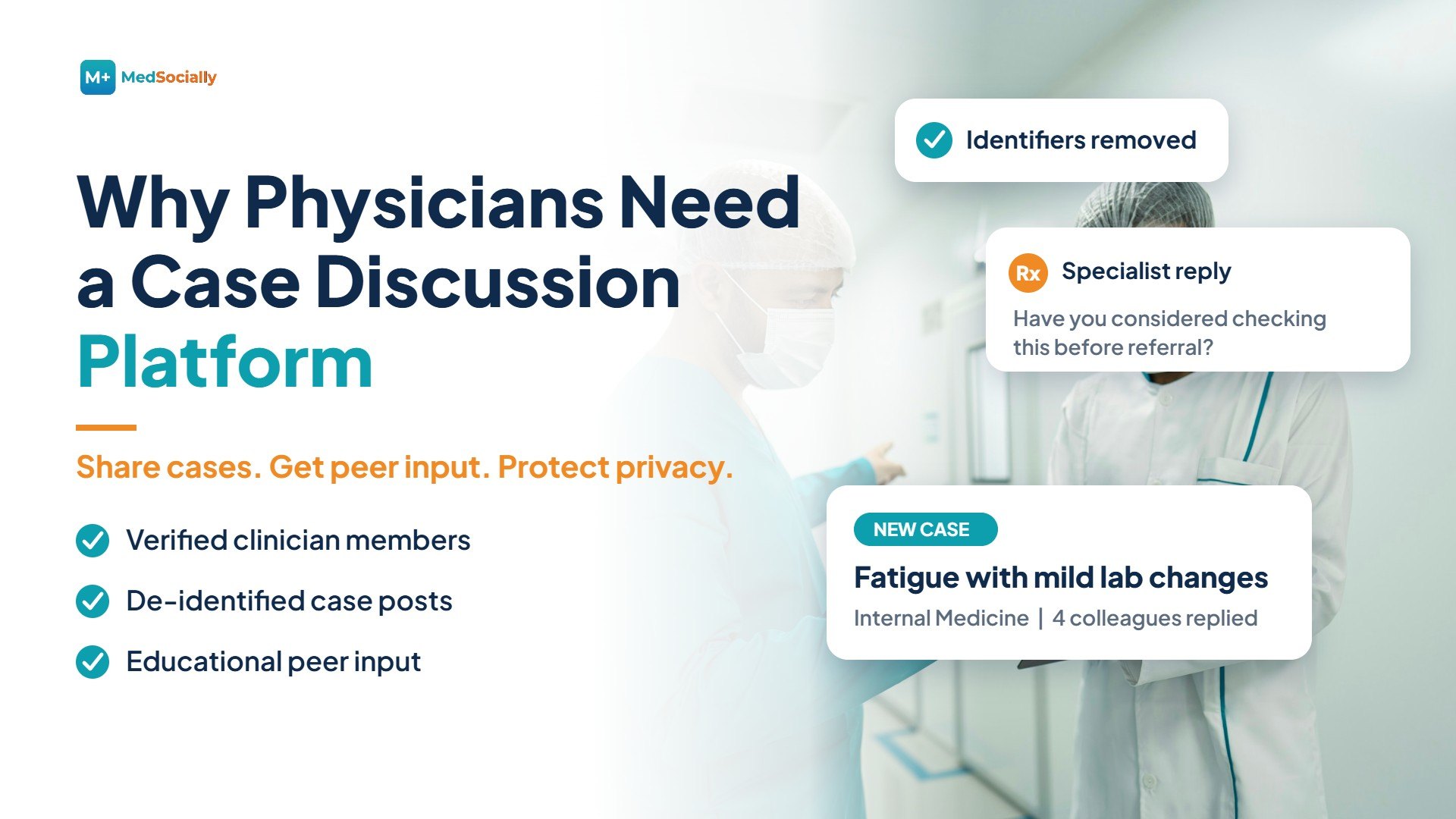
Every physician knows the moment. A patient's results do not match the story, the guideline does not quite fit the situation, and the colleague you would normally ask is in another...
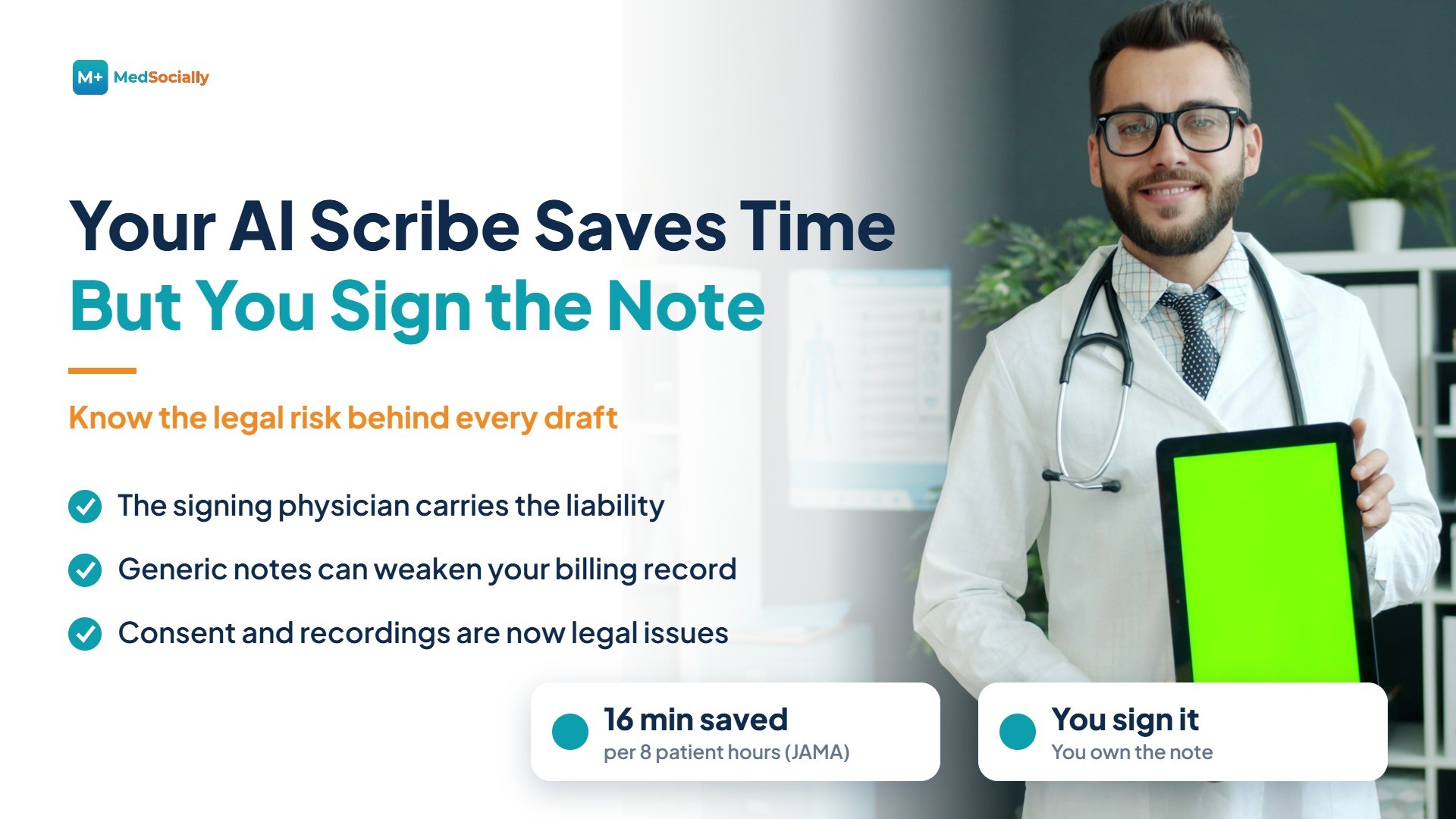
AI scribe documentation has changed the end of the clinic day for many of us. Notes that used to eat an hour after dinner now appear as drafts before the next patient is roomed. Th...
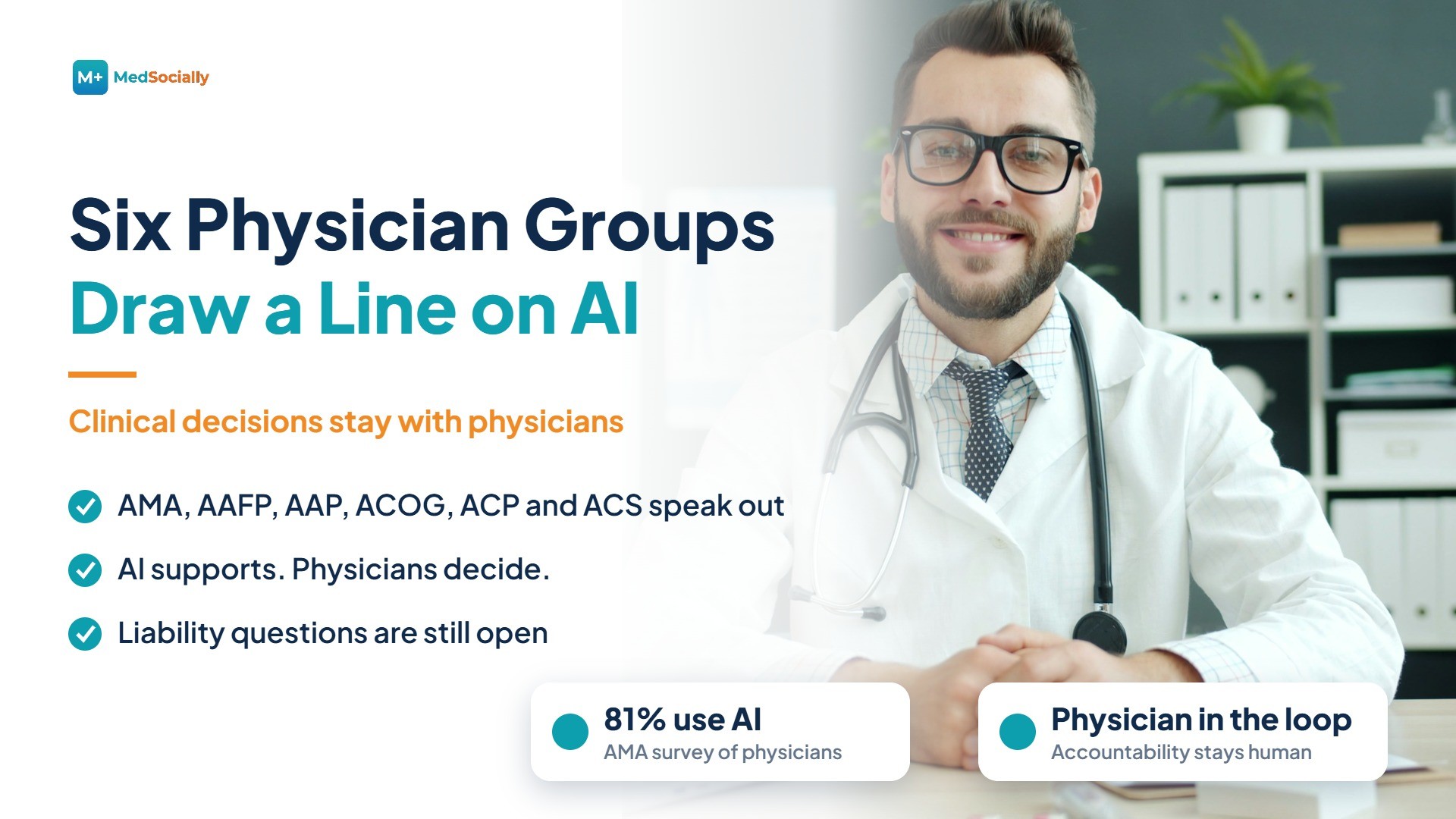
Six major physician groups issued a joint statement on September 30 that said what many of us feel in the exam room. AI is a helpful tool. It does not outperform physicians and it ...
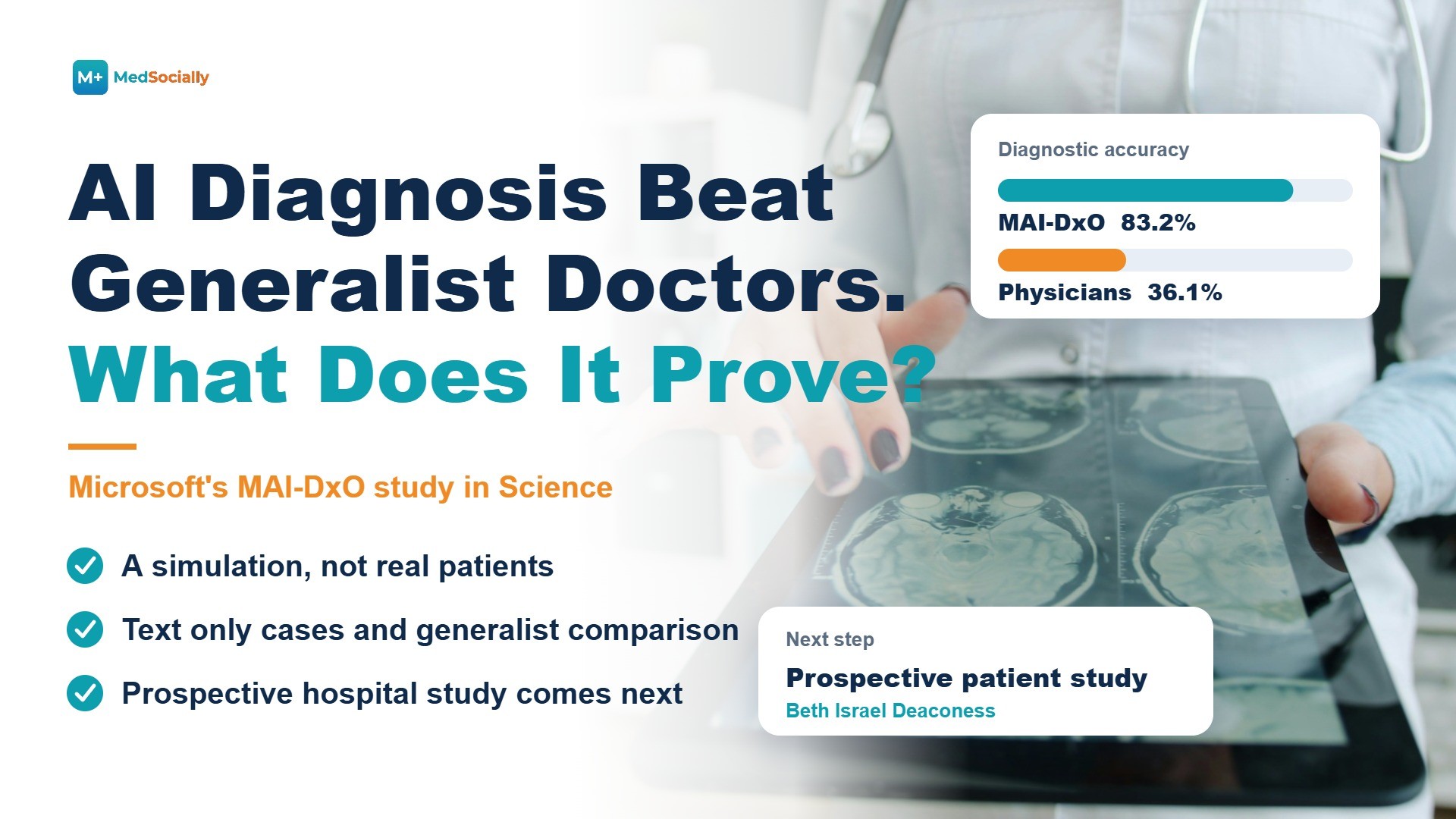
Every doctor should take note of the results of Microsoft's diagnostic AI. In a study published in Science, the system outperformed generalist physicians on difficult diagnostic ca...
Physician burnout seems to be on the decline. It is good news for a profession that has felt exhausted and stressed for years. But another trend deserves attention. Clinics are ope...