Healthcare is changing more rapidly than it has ever before. The practice of medicine is continually changing with breakthroughs in medical technology, new regulations, new treatment guidelines, artificial intelligence (AI), value-based care and changing patient expectations. These advancements bring promise of better patient care, but also pose a challenge for healthcare workers to keep pace with the evolving landscape while managing their own workloads.
Change is not an option for doctors; it's a must. Continuous learning and collaboration is essential to staying up-to-date with new research, updated clinical guidelines, health policies, and digital advancements. Fortunately, Medical Communities have evolved into priceless assets to assist Physicians in leading through these constant changes with confidence. Medical Communities can be found online, on social media, on professional networks, or in specialty groups or collaborative digital communities where healthcare professionals can connect with each other, share knowledge and experiences, and learn about the latest advances in medical research.
In an era of fast-changing healthcare, Medical Communities are evolving from mere networking platforms to platforms for achieving a 360-degree view of the market.With the ongoing rapid evolution of healthcare, Medical Communities now are more than networking platforms—they are platforms for a 360-degree view of the market. They have become key learning, working, creating and professional development centers. These communities allow doctors in various specialties, practice environments, and locations to share best practices, learn from each other, and evolve their practice to better serve their patients and community.
Medical Communities are professional groups of physicians, health care executives, educators, nurses, specialists and researchers who share common interests, specialties, or clinical goals. These communities are both real-world and digital and aim to encourage collaboration, learning, communication, and growth.
The Medical Communities of today are not limited to medical associations. Physicians can now be involved in discussions, attend virtual conferences, access education and collaborate in real time with colleagues around the world on digital platforms. These communities are physician discussion forums, specialty groups, private networking groups, online continuing education, hospital-based professional networks, and healthcare collaboration platforms.
Medical Communities are not like other social media, they are secure and professional spaces where health care professionals can come together to discuss clinical topics, to review evidence-based practices, seek advice on complex cases, and share experiences related to patient care. Many communities also have guidelines that they have established to ensure scientific accuracy, respectful discussion, and ethical communication.
The most important thing is that Medical Communities foster a culture of learning. Instead of simply holding conferences or publishing journals, doctors have access to a continuous conversation, which can help them stay up-to-date on medical advancements.
Medicine advances rapidly. Clinical trials, treatment recommendations, diagnostic technologies, pharmaceutical developments and public health updates are becoming available almost every day. This large volume of information can be difficult to stay on top of for busy physicians.
Medical Communities can significantly speed up sharing of clinical information. Doctors can now discuss new research results immediately after the publication without waiting for conference presentations or journal summarisation. Experts frequently review and consider the new evidence and make recommendations and real-life experiences.
This is a joint sharing of knowledge, which is beneficial for doctors at any stage of their career. The older physicians bring years of valuable clinical experience, and the younger ones frequently bring newer technologies, revised guidelines and new ideas. The mix of both is designed to foster a learning experience that is not episodic, but continuous.
Evidence-based decision making is also endorsed by Medical Communities. Doctors often have to make decisions that are not always advocated in textbooks. Clinicians can get valuable cross-curricular feedback from colleagues in other disciplines on how to approach difficult cases by discussing them with them, which can enhance diagnosis, treatment planning, and overall patient management.
As healthcare evolves quickly, it is more crucial than ever to communicate in a timely manner. Medical Communities enable Medical Professionals to easily access reliable information at the click of a button, whether it's related to new therapies, changes in clinical guidelines, or the threat of emerging infectious diseases.
The continuing medical education (CME) is still a vital part in the medical profession. As medical information continues to grow, it is vital that a doctor's knowledge is kept up to date all the time, in order to provide high-quality patient care and remain competent.
Medical Communities have changed the way physicians look at continuing education. Conference-based and face-to-face teaching has evolved into a year-round learning experience that's more flexible and accessible.
Today, doctors can attend live webinars, virtual grand rounds, specialty workshops, expert panel discussion, interact with cases, online certification programs, on-demand education libraries and more with professional Medical Communities. These resources enable healthcare professionals to learn anywhere and anytime, even when they're at work.
Another major benefit is peer learning. One of the best ways for doctors to learn is by discussing cases with other physicians who have seen similar cases. Medical Communities provide the venue for these interactions, enabling members to pose questions, exchange treatment options, discuss challenging cases, and gain practical insights from seasoned experts.
Additionally, many Medical Communities also curate educational materials that are relevant to changing clinical guidelines and specialty recommendations. Instead of having to look for information on a variety of websites, doctors can use quality and organized educational information in a trusted professional network.
It's an ongoing educational resource that helps doctors stay up to date and effectively apply new information in their clinical practice.
There has been a greater level of collaboration within the healthcare sector. It is a common occurrence that a patient will have to coordinate care between primary care physicians, specialists, pharmacists, nurses, therapists, social workers and healthcare administrators. Medical Communities build these inter-disciplinary relationships by establishing communication and teamwork opportunities.
Professional networking is much more than job promotion. In Medical Communities, doctors build a network of trusted relationships with other doctors that will offer clinical advice, referral, mentorship, research opportunities and professional support.
One of the most beneficial collaborative activities continues to be the case discussion. Uncommon diseases, uncommon presentations or uncommon management decisions frequently occur in the practice of medicine where collective wisdom and experience increases the confidence and clinical judgement for the physician. Anonymized cases allow clinicians to discuss the specifics of a case with peers, gain diverse points of view and still respect patient privacy and ethical standards.
Interdisciplinary collaboration also enhances patient outcomes. Medical Communities are a group of individuals with various medical backgrounds together to understand how medical professionals in other specialties diagnose, treat, rehabilitate and provide long-term care. This co-operative setting enables more patient-centred, coordinated care delivery.
Another key benefit is research cooperation. The physicians interested in clinical research can communicate with investigators from different institutions and countries, involved in multicenter research projects, share data, and contribute to science. Such partnerships drive innovation and create opportunities for academic and career development.
In the end, Medical Communities bring together single expertise and make collective intelligence available, for the benefit of healthcare professionals and their patients.
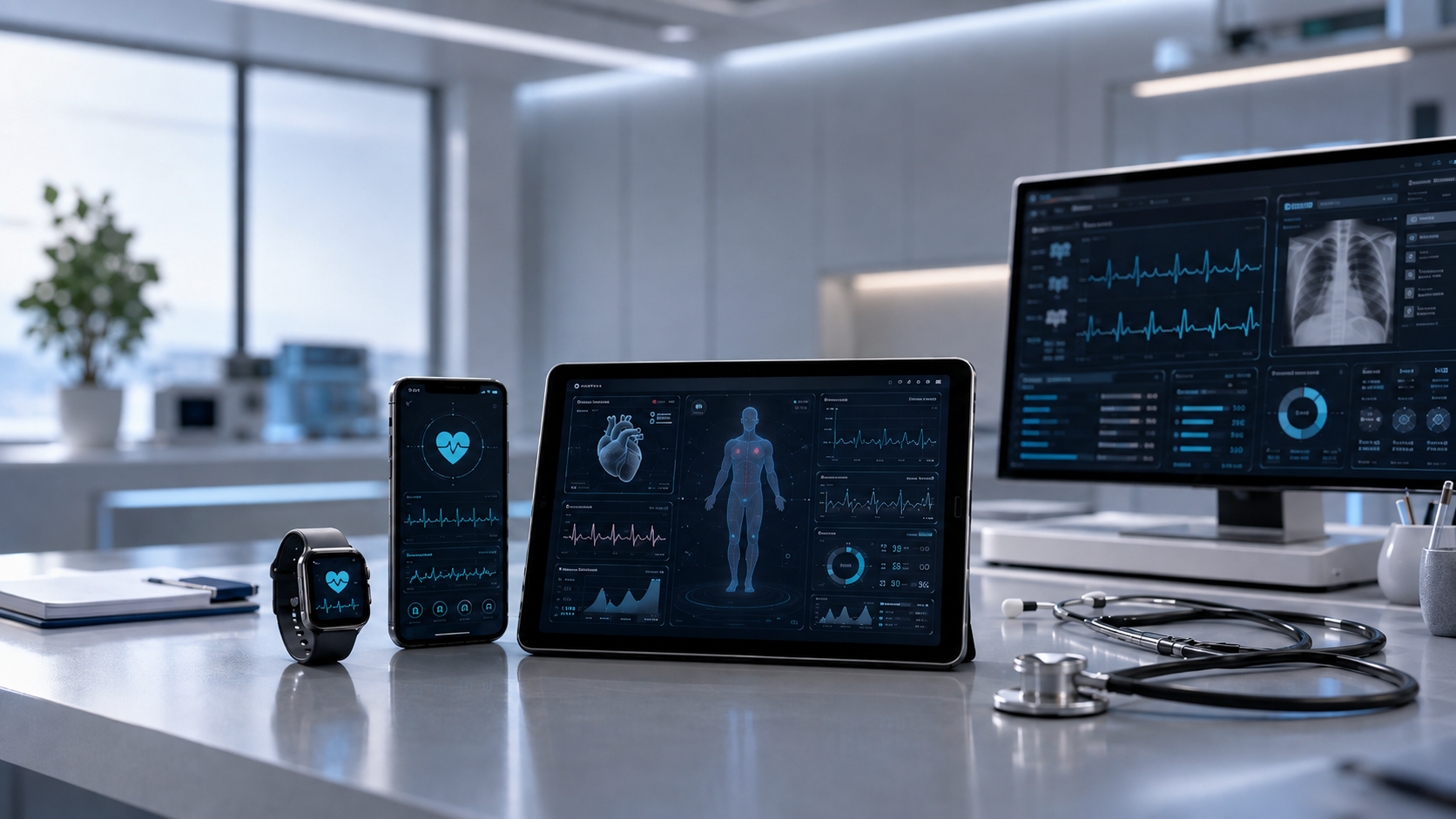
Technology in healthcare is constantly evolving at a rapid pace. The world of medical practice is evolving quickly with the help of artificial intelligence, machine learning, telemedicine, remote patient monitoring, wearable devices, electronic health records (EHRs), digital therapeutics, and clinical decision support systems.
These advancements have potential to increase efficiency and patient outcomes, but they also represent a learning curve for doctors who have to learn to incorporate new technology into their daily practices.
Medical Communities are an important partner in assisting physicians in their digital transformation journey. Members share first-hand experiences implementing new technologies, discuss challenges and put forward sensible suggestions, and assess new digital tools based on real-life clinical experience.
For instance, healthcare providers who are already using telemedicine can share best practices on how to communicate with patients virtually, how to document and communicate with them, how to get reimbursed, how to optimize workflow, and how to engage patients. Likewise, doctors who are introducing AI tools for their documentation or decision-making processes can get insights from other practitioners who have already successfully adopted these tools.
Optimizing the electronic health record is also a prevalent subject of conversation in Medical Communities. Doctors often exchange tips on how to be more productive, improve workflow, document things efficiently, and integrate things to ease administrative tasks.
Medical Communities also foster well-rounded conversations on healthcare innovation. Doctors address patient safety, ethical and regulatory concerns, barriers to implementation of the technology, and its limitations openly, not just through marketing claims. This practical view assists the clinician's technology adoption decisions.
One of the key challenges for effective implementation, as digital health evolves, is collaborative learning.
Doctors are called upon to perform a lot by modern medicine. Administrative complexity, documentation requirements, staffing problems, financial strains, regulatory requirements, and a rise in patient expectations are all factors that cause professional stress and burnout.
Medical Communities are not only educational but also of emotional value.
Professional isolation occurs in many physicians, especially those in rural areas, smaller hospitals and highly specialized practices. Relationships with others who are in similar situations can help minimize isolation, and encourage, mentor, and problem solve together.
In trusted Medical Communities, doctors are able to discuss workplace issues, transition and transitions in their careers, leadership growth, work-life balance, burnout prevention and professional resilience. These discussions help normalise the everyday problems and offer tips on how to cope with them from people who experience them, as well.
Mentorship is another valuable aspect of physician well-being. New doctors could use some help with clinical decision making, career planning, leadership development and personal growth from their more experienced peers. Similarly, senior physicians are involved in training the next generation of health care leaders through mentoring.
Additionally, a number of Medical Communities have wellness programs, mindfulness programs, mental health resources and leadership development programs created specifically for healthcare professionals.
Having a supportive professional network also helps to enhance physician satisfaction and help deliver safe, caring, patient-centered care. A sense of connection, support, and value are important factors that help physicians cope with the demands of modern health care.
Medical Communities will continue to grow as health care becomes more inter-connected. With the advent of Artificial Intelligence, personalized medicine, precision healthcare, digital collaboration platforms and global medical research, doctors are presented with new opportunities for learning and collaboration outside the confines of their institutions.
Intelligent knowledge management systems, AI-driven learning suggestions, adaptive learning journeys, and improved virtual collaboration spaces are likely to be incorporated into the Future Medical Communities. This innovation will further facilitate physicians' ability to quickly access relevant information and improve interdisciplinary communication.
But international cooperation will also gain in significance. Doctors will continue to learn from world colleagues, share medical experiences in different healthcare systems and engage in global research projects that drive medical innovation.
Medical Communities are becoming full professional ecosystems in which education, networking, research, mentorship, adoption of technology, and physician wellness converge. They have a broader impact on health care quality than their own professional development.
The healthcare sector is constantly changing, and doctors must stay up to date with the latest clinical research, digital tools, compliance regulations, and patient needs. These changes can be a bane for those going through them, and so cooperation is more important than ever.
Medical Communities have proven to be invaluable assets to physicians at all stages of their careers. They promote the sharing of knowledge, evidence-based medicine, continuing education, interdisciplinary collaboration, technology adoption, and emotional support.
Medical Communities will continue to play a pivotal role in enabling physicians to provide safer, smarter, and more patient-centric care, as medicine becomes more connected and data-driven. These communities enable physicians to not only stay current with the transformation of the industry, but to be able to drive it.
Medical Communities for today's health care professionals is not just a place for networking; it's a platform for clinical excellence, career advancement, and patient care innovation.
Social media is no longer just a place where healthcare practices announce new office hours or post a photo on National Nurses Week. For many patients, it has become part ...
For millions of people, coffee is part of the daily routine. It starts the morning, fills the gap between meetings and often provides a small moment of comfort during a busy day...