Think about walking into clinic and finding that an AI system has already interviewed your patients, taken their symptoms and proposed a plan. Your job is to check its work, not to run every visit yourself. Sounds efficient. But would you trust it? As health systems consider handing the first patient conversation to AI, the question of will AI replace doctors is getting more serious.
The technology is moving fast and clinicians are overworked. Are we building AI to support care, or training doctors to oversee AI?
At The Economist's AI in Health Summit in London this November, healthcare leaders talked about a future in which AI handles some clinical consultations with minimal physician involvement. Medscape reports that the chief medical officer of the AI center at Sheba Medical Center in Israel estimated that 20% to 30% of clinical interactions could eventually be handled by patient-facing AI working with conditional autonomy. His center is planning patient-facing tools around 2028.
Imagine a patient messaging the clinic about a mild respiratory illness. The AI gathers symptoms, screens for red flags and recommends a next step. A doctor steps in only when the system flags uncertainty or danger. That is conditional autonomy in practice, and it sounds reasonable. But what if the patient describes the symptoms poorly or forgets the one detail that matters? What if the AI confidently recommends the wrong level of care? These are not only technical questions. They are questions of clinical accountability.
Ask a physician leader at Northwell Health will AI replace doctors and the answer is no. His reasoning was practical. There is no surplus of health workers anywhere in the world. The World Health Organization projects a global shortfall of about 11 million health workers by 2030. In that context, replacing physicians is a strange goal. We need more clinical capacity, not less.
The more compelling case for AI for physicians is that it frees up time for the patients who need our skills. Imagine a primary care doctor with a fully booked afternoon. Several patients need simple follow up instructions. Others have complicated histories, drug interactions or symptoms that do not fit a familiar pattern. AI could organize the routine information and do a first pass so the doctor can focus on the tough decisions.
That only works if implementation is good. If we spend our days fixing AI mistakes, clearing alerts and documenting why we rejected a recommendation, the time we were promised is gone. The technology should make clinical work easier. It should not simply move the work somewhere else.
An Oxford primary care researcher raised an uncomfortable question at the summit. Doctors may end up supervising semi or fully autonomous AI agents rather than caring for patients directly. He also cautioned that physicians could become the moral crumple zone of healthcare AI. In simple terms, we could take the blame for failures in systems we did not design and have little control over.
Suppose you oversee an AI system that screens patients before they reach your clinic. A patient develops a serious complication after getting poor automated advice. The hospital asks why you did not step in. But you never saw that conversation, because the system labeled it low risk and never requested a review. Responsibility without control is not oversight. It is exposure.
For physician supervision to work, clinicians need to see what the system saw, follow clear escalation rules and hold the power to override it. Organizations also need to spell out which decisions belong to physicians and which responsibilities stay with the vendor. And as the researcher said, most of us did not enter medicine to watch automated conversations from a back office.
A health technology CEO from Lisbon offered a more pragmatic direction. He said AI should not begin inside the consultation but in the waiting room and in the gaps where patients currently get no care at all.
That deserves serious consideration. Patients have trouble getting appointments and knowing where to go for care. Well designed patient-facing AI could collect information before a visit, flag requests that need a human right away and help patients understand what to do next. The goal is better access and smarter use of the clinicians we already have.
But access without safety is not progress. The same CEO said vendors must be held responsible for the safety of their products, just like any other medical product. Physicians should not become the default liability shield for technology firms. Any real dent in the physician shortage will take careful rollout, clear accountability and a solid handoff to a human clinician.
Like it or not, AI is already part of everyday practice. According to the Doximity 2026 Physician Compensation Report, 66% of physicians use AI daily or weekly, and 39% say AI proficiency already factors into hiring and promotion. AI literacy is becoming a professional expectation.
Training has not kept up. The Philips Future Health Index 2026 found that 77% of US healthcare professionals say AI training at their organization is unavailable, limited or inconsistent. That should concern every health system leader. You cannot expect doctors to oversee increasingly independent tools without training them to do so.
Good training goes beyond which buttons to press. Clinicians need to understand where AI fails, when human review is necessary and how to spot an unsafe recommendation. They also need support when they override the machine.
So will AI replace doctors? The more likely near term change is in how we spend our time and how we provide oversight. Some routine interactions will be automated. Complex cases will still require clinical reasoning, good communication and professional accountability.
None of this should be seen as inevitable just because the technology exists. Physicians need a say in which interactions are safe to automate, how safety is measured and when a patient should be seen by a human. The real test is not whether AI can produce a plausible consultation. It is whether that consultation is safe, appropriate and reliable. The future of medicine should make better use of physicians, not reduce us to a signature on a decision made somewhere else.
Would you be comfortable with AI handling first consultations with you as the supervisor? Would it lighten your load or add another layer of liability? Is your organization already testing patient-facing AI, and how is it going? Share your experience with colleagues in the MedSocially community. The physicians who speak up now will help shape how these tools are used in our clinics.
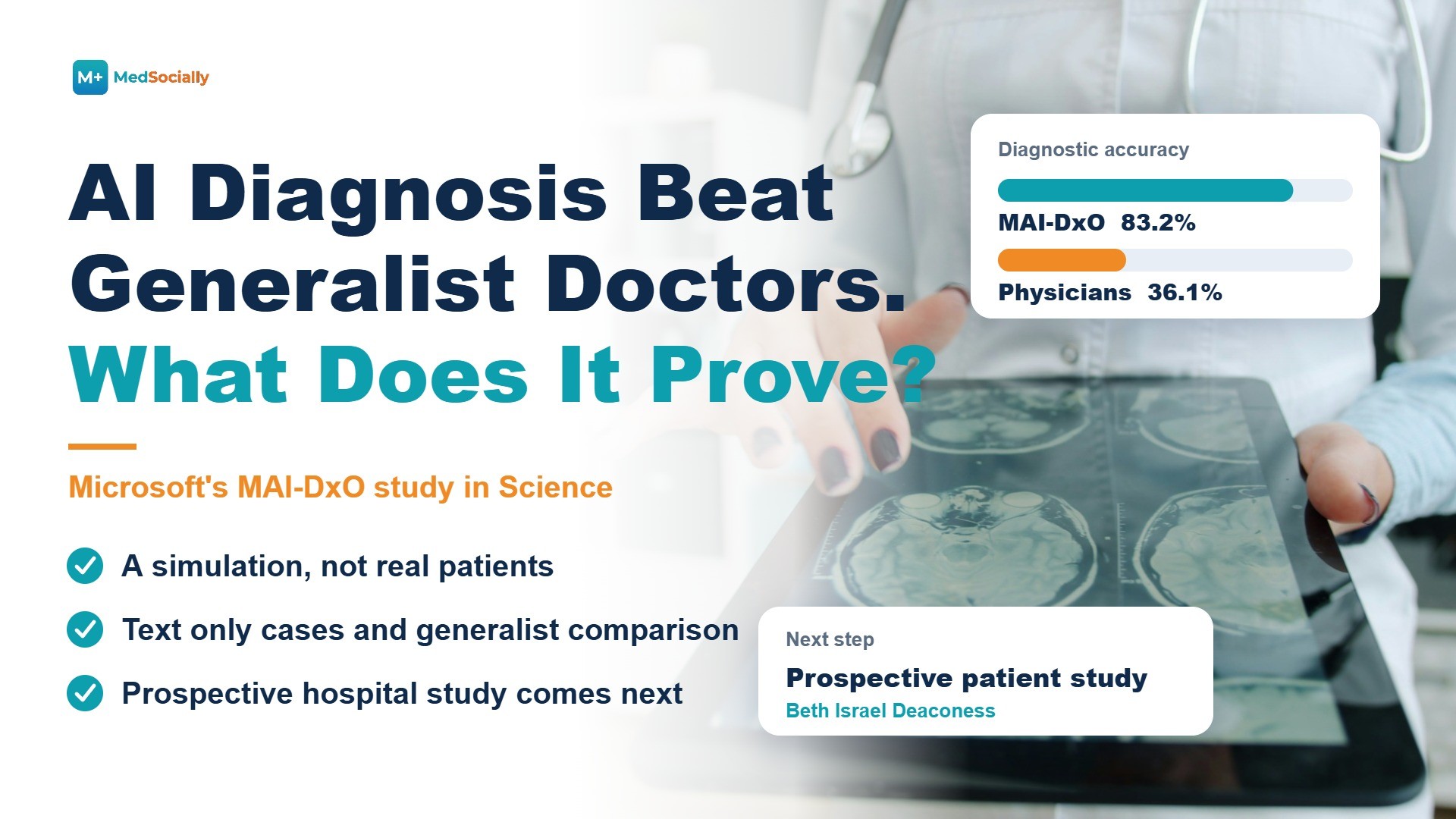
Every doctor should take note of the results of Microsoft's diagnostic AI. In a study published in Science, the system outperformed generalist physicians on difficult diagnostic ca...
Physician burnout seems to be on the decline. It is good news for a profession that has felt exhausted and stressed for years. But another trend deserves attention. Clinics are ope...
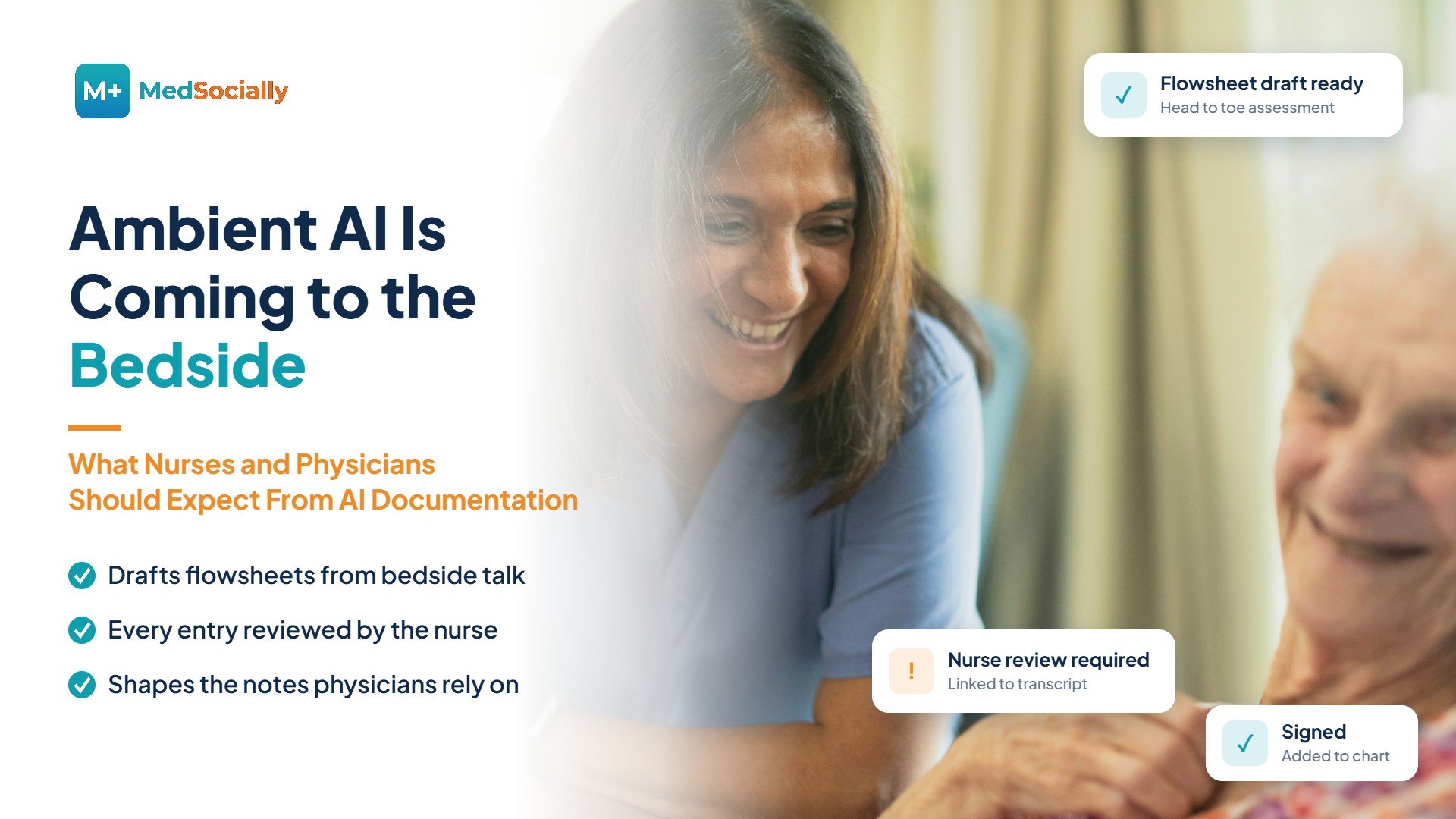
Ambient AI nursing documentation is moving from concept to clinical use. For the last several years these tools were built around physician notes. Now they are moving into inpatien...
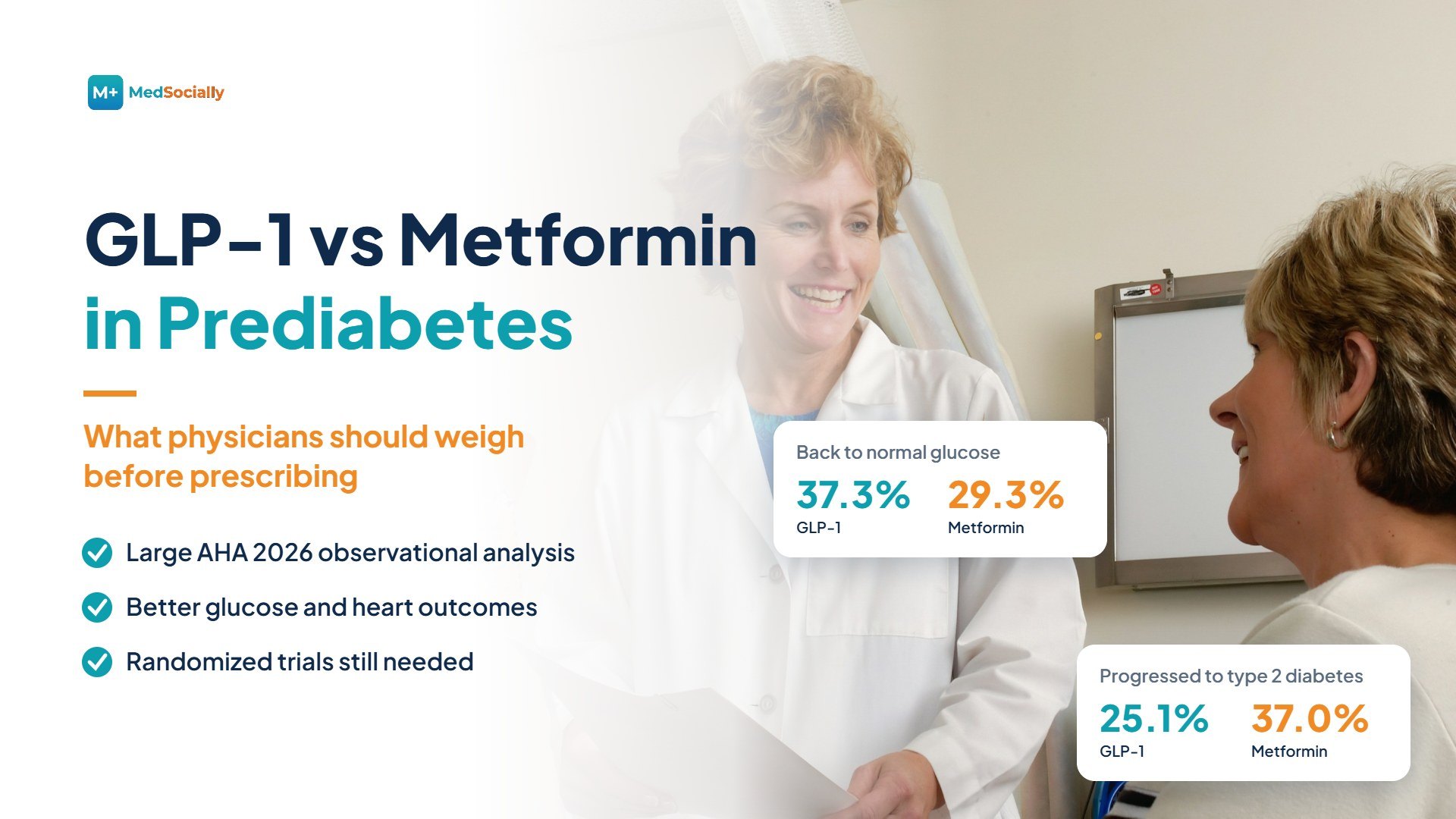
You have a patient with prediabetes in your exam room, and she asks a question you have heard more than once this year. "If these weight loss shots work so well, why am I still on ...
AI can write a convincing clinical explanation in seconds. Convincing does not always mean correct. As more of us bring clinical AI tools into daily practice, the question is no lo...