From the very beginning of medicine, it has been a community enterprise. The formal learning of young doctors long before the advent of digital platforms was through rounds, conferences, mentorship, and informal discussions with more experienced colleagues. The magnitude and velocity of this connection have changed, but not the nature of it.
The complex and rapidly evolving healthcare landscape is creating a new role for Healthcare Communities, which are integral to the learning, networking, opportunity discovery, and navigation of young doctors. Residency and the beginning of practice can be a thrilling experience, yet they can also be isolating. Meanwhile, young physicians must strive to stay current with new research, new technologies, administrative requirements, and evolving patient expectations, and find a way to build confidence in their professional identity.
Digital professional networks are not a substitute for formal training, experienced mentors, or robust clinical teams. When done in a careful way, though, they can provide young doctors with that which medicine has always needed: people who know what they do.
A young physician can be surrounded by people and feel lonely all day long.
There are rotation of services among residents. Fellows take on more specialized situations. For new attendings, the “built-in” teaching format of residency may suddenly disappear. Doctors moving for training or their first position also may have to start over by establishing new social and professional connections.
Healthcare Communities can shorten some of that distance by making it more location-independent, institution-independent, and hierarchy-independent of making connections between professionals.
A community hospital doctor can share their thoughts with the academic hospital physicians. A new hospitalist can observe the workflow of other hospitalists. If a resident is interested in a cardiology career, informatics, public health or entrepreneurship, he or she can start networking before taking the next step toward a formal career change.
Healthcare professions have more to do with than just clinical knowledge. Relationships, exposure, feedback and opportunity are also important.
The old-fashioned way of mentoring is to find the right senior doctor at the right hospital at the right moment. That model can be effective, but it's not always possible.
Mentorship has been associated with career counseling, career development, career choice, and research productivity in academic medicine. There are also several mentoring models that have been reviewed, such as distance mentoring, group mentoring, peer mentoring and one-to-one mentoring.
Healthcare Communities take that one step further.
Rather than relying on a singular mentor to address all of their career-related concerns, young physicians can expand their circle of career advisors.
Assistance in research can be provided by one person.
Yet another might provide fellowship advice.
An understanding of contract negotiation may be a peer's area of understanding.
There is someone else who knows digital health, knows private practice or knows medical entrepreneurship.
No one knows all the ways to the medicine. Many paths are open to young doctors for learning through a strong community.
Medical information is rapidly changing.
New studies appear.
Guidelines change.
AI tools go into clinical workflows.
New drugs, devices and care approaches are added.
Professional learning is increasingly occurring in small bites throughout the day, and formal CME is still very important. Healthcare Communities can make those moments useful.
A doctor can watch a presentation on a newly conducted trial, read the views of experts or participate in a virtual event. Social media and online professional networks have been the subject of research as a resource for learning, networking and professional growth in health care.
The importance of context for young physicians.
A paper is an explanation of what the researchers discovered. Teachers and experienced clinicians can assist in the discussion of how those findings might apply to their practice.
No evidence will suffice and the quality of the information, participation, and healthy skepticism are key to the usefulness of Healthcare Communities in supporting evidence.
When it comes to medicine, professional networking can seem transactional.
It should not.
A useful network isn't just one where people may be able to get someone a job. It consists of a network of working relationships that offer a doctor the chance to connect with partners, mentors, scientific research, leadership roles and completely new paths for their careers.
Relationship building will be made simpler to begin earlier with Healthcare Communities.
A medical educator can reach out to a resident who is interested in medical education.
A curious person interested in health policy can join in with the policy debates.
Physician interested in AI can benefit from the experience of other clinicians in informatics, implementation.
A future scientist can connect with individuals that are researching the same clinical issues.
As time passes, these interactions help build professional visibility. Individuals start to understand what sort of physician cares and the skills they are acquiring.
This visibility can, in turn, make it easier to work together without it being a promotional exercise.
Physicians also are becoming more public figures as educators and digital creators.
Some are referred to as physician influencers. When they're at their best, they leverage digital media to clarify medical concepts, interpret research, to talk about healthcare issues, and to educate patients.
Healthcare Communities can be a digitally relevant space for young doctors to learn.
Not all doctors require a ton of patients.
Influencers in healthcare, in particular, should be judged by more than just follower numbers, however.
One doctor who can craft a complicated medical concept in a way comprehensible to 500 engaged people might be able to generate more value than one with several thousand less interested.
Online communication of medicine is more and more helpful in videos, podcasts, patient education, professional discussions, webinars and online communities.
The goal should not be popularity.
It should be credible.
A physician can create meaningful value with a relatively small audience if the information is accurate, responsible, and useful.
Burn out is still a big issue in healthcare.
Physician burnout is a chronic stress-related condition characterized by emotional exhaustion and depersonalization, according to the American Medical Association. It also highlights that a number of factors are related to the practice environment such as workload, administrative tasks, technology and regulation.
That distinction matters.
Healthcare Communities should not be seen as a solution to understaffing, too many records, too many hazards, or a dysfunctional healthcare system.
Staying connected is important, however.
Facilities have established peer support programs for physicians facing difficult clinical situations and professional stressors.Health systems have established peer support programs for physicians facing difficult clinical situations and professional stressors. Also featured in the AMA's story is the work of the Mayo Clinic, which found structured small group physician meetings were linked to decreased social isolation and increases in well-being and job satisfaction.
A young doctor doesn't always have to be given any more wellness presentations.
They require another doctor who knows what they are going through and can say:
It passed me as well, here is what helped me.
This type of link can be hard to quantify, yet really significant.
The new generation of doctors is coming into medicine at a time of rapid change in technology.
The landscape of healthcare is transforming with the advent of AI, ambient documentation, remote patient monitoring, virtual care, clinical decision support, and emerging patient engagement technologies.
Healthcare Communities provide young doctors an opportunity to engage in those discussions rather than just accepting technology that has been developed by other people.
Frontline clinicians are aware of workflow, patient needs and clinical compromises that technology teams are not necessarily aware of. Whereas, ideas can be challenged at an earlier stage when doctors, researchers, founders, engineers and healthcare leaders interact.
Young doctors may ask themselves some significant questions:
Is this technology delivering time savings?
Does it enhance the patient's experience?
Does it bring in extra work?
Does it pose new safety hazards?
Will it be used in practice by physicians?
Innovation isn't always being an entrepreneur.
This can involve optimizing an order set, designing a workflow, membership in an innovation committee, or being part of the clinical governance team, as well as supporting a hospital's responsible assessment of an AI tool.
These opportunities can be introduced to young physicians much earlier in their medical practice through strong Healthcare Communities.
While general social platforms may be helpful, health-related conversations may be diverted by entertainment, politics, advertising and engagement algorithms.
This is one of the reasons why committed Healthcare Communities are getting noticed.
Medsocially.com is a healthcare-focused community platform centered on medicine, wellness, and professional connections, for instance.
According to Medsocially, the digital space is a platform for connecting around healthcare content and communities for clinicians, researchers, founders, patients, creators and others who are passionate about health. The site also features professional profiles, communities, events and verified professional profiles.
If you're a young doctor, websites like Medsocially can also offer you another avenue to:
Gain access to doctors and healthcare providers.Get in touch with doctors and health care providers.
Abide by topics related to their field of specialization
Join in professional conversations
Share educational insights
Describe multiple career options
Discover how to innovate in healthcare.
Develop a professional online profile
These environments can also be an opportunity to find an audience that is already interested in health and medicine for physicians looking to become educators or thoughtful digital creators.
Young physicians do not have to be ‘influencers' in the classic sense.
They have the option to join Healthcare Communities just to contribute, ask better questions, make connections and be known for their areas of medicine they are passionate about.
However, there are responsibilities associated with the advantages of Healthcare Communities.
There are ethical issues related to patients' confidentiality and privacy, professional boundaries, and proper online behavior. According to the AMA guidelines on ethics, the physicians must respect the privacy of the patients and keep the boundaries of their profession as they should do elsewhere.
Thus, young professionals should consider themselves as continuing their professional activity online.
It implies carefulness when talking about clinical cases, refraining from patient-related information, keeping personal opinions apart from proved facts, declaring any possible conflicts of interest, and understanding that the online information might be easily accessible for a long time period.
Being a professional does not mean to behave mechanically.
Doctors have personalities.
They can use humor.
They can talk about sensitive matters.
They can argue.
They can even criticize healthcare practices.
It does not mean that the personality has to be taken out of the internet discourse.
Not all online communities are created equal.
Great Healthcare Communities generate more signal than noise.
They foster credible debate rather than sensational statements. They help distinguish experts, encourage evidence-based debate, and enable members to network around their professional interests.
A young doctor needs to ask himself:
Is the community teaching me?
Am I meeting people who I wouldn’t otherwise have met?
Are the debates credible?
Do I have something credible to say?
Does it help me professionally?
A great community makes a young doctor more knowledgeable, better connected, and more credible.
Clinical practice will always require knowledge, skills, judgment, empathy, and human interaction.
No network can substitute for those fundamentals.
But today's doctor works within a highly networked healthcare organization.
The doctors who succeed might turn out to be those who can build networks of contacts, learn continuously, communicate effectively, participate in innovation, and find reliable peers beyond the walls of their particular organization.
Healthcare Communities offer an opportunity to unite a lot of those activities.
For the previous generation of physicians, community would have been defined by a hospital, a medical society, a specialty meeting, or a local physician group.
But for the next generation, community can be all of those and much more.
A young doctor can now find mentors miles away.
Get advice from a specialist in a different health system.
Talk about a new technology with an innovator.
Find potential research partners.
Take part in discussions on the future of medicine.
Educate patients and the general public.
All of this regardless of what kind of organization they happen to work for.
This is not the end of the traditional physician's community.
It is its growth.
With the complexity, the digitization, and collaboration becoming essential parts of clinical.
Social media is no longer just a place where healthcare practices announce new office hours or post a photo on National Nurses Week. For many patients, it has become part ...
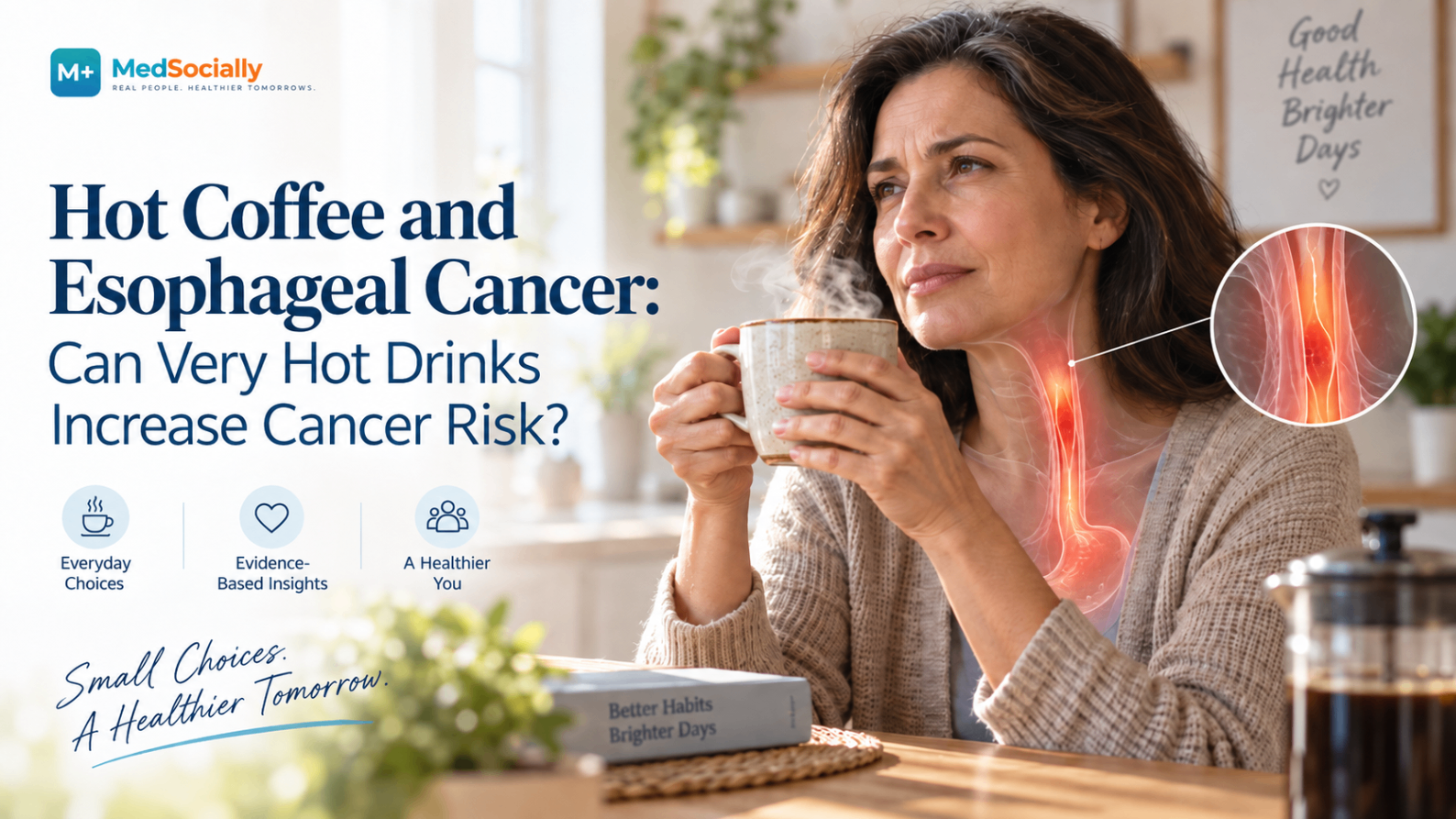
For millions of people, coffee is part of the daily routine. It starts the morning, fills the gap between meetings and often provides a small moment of comfort during a busy day...